New Delhi, November 29, 2026: India and Denmark have adopted a five-year Joint Action Plan for 2027–2031, setting out a wider programme for cooperation in defence, emerging technologies, space, skills, climate and the movement of people. The agreement followed the fifth India-Denmark Joint Commission Meeting held in New Delhi on Saturday, November 28.
External Affairs Minister S. Jaishankar and Denmark’s Foreign Minister Lars Løkke Rasmussen co-chaired the meeting. The plan is intended to guide the next phase of a relationship that has included a Green Strategic Partnership since 2020.
What the 2027–31 action plan covers
The two sides agreed to broaden cooperation in defence and security, emerging technologies, space, maritime issues and people-to-people mobility. They also agreed to begin a new Technology Dialogue and a Climate Dialogue. The discussions build on a maritime security dialogue held in June 2026 and existing cooperation in areas such as clean energy, water, shipping and sustainable development.
In Bengaluru, Rasmussen also visited Hindustan Aeronautics Limited and interacted with ISRO officials, giving the visit a practical technology and aerospace dimension alongside the diplomatic talks in New Delhi.
Three agreements were exchanged or renewed
- Skills and vocational education: a renewed memorandum of understanding on skill development, vocational education and entrepreneurship.
- Culture: a renewed Cultural Exchange Programme between the two countries’ culture ministries.
- Financial services: an MoU between India’s International Financial Services Centres Authority and the Danish Financial Supervisory Authority.
The financial-regulation agreement is intended to create a structured channel for cooperation between the two authorities, while the skills and cultural agreements continue established exchanges.
Why the partnership matters for India
Denmark has expertise in areas that are relevant to India’s long-term development priorities, including renewable energy, maritime services, water management and industrial efficiency. A more regular technology and climate dialogue could help government agencies, universities and businesses identify specific projects, although the action plan itself does not guarantee investment or project approvals.
The two countries also discussed defence-industry cooperation and counterterrorism. The next phase could create more opportunities for research institutions and companies, but the outcomes will depend on follow-up agreements and implementation.
What has not been finalised yet
The ministers said they would look forward to a formal announcement of an elevated Comprehensive Green Strategic Partnership at a later Prime Ministerial-level stage. That elevation should not be described as already completed. The 2027–31 action plan has been adopted, while the formal announcement of the upgraded partnership is still expected later.
The meeting also did not create a separate India-Denmark free-trade agreement. The ministers discussed the wider India-EU trade relationship, which is a different process.
Sources and further reading
- Ministry of External Affairs: Fifth India-Denmark Joint Commission Meeting
- The Indian Express: India and Denmark agree on a five-year action plan
- Hindustan Times: India and Denmark adopt a five-year action plan
Related Infoflick coverage: India’s new research infrastructure at CSIR-CDRI and the Northeast-specific antivenom research project.
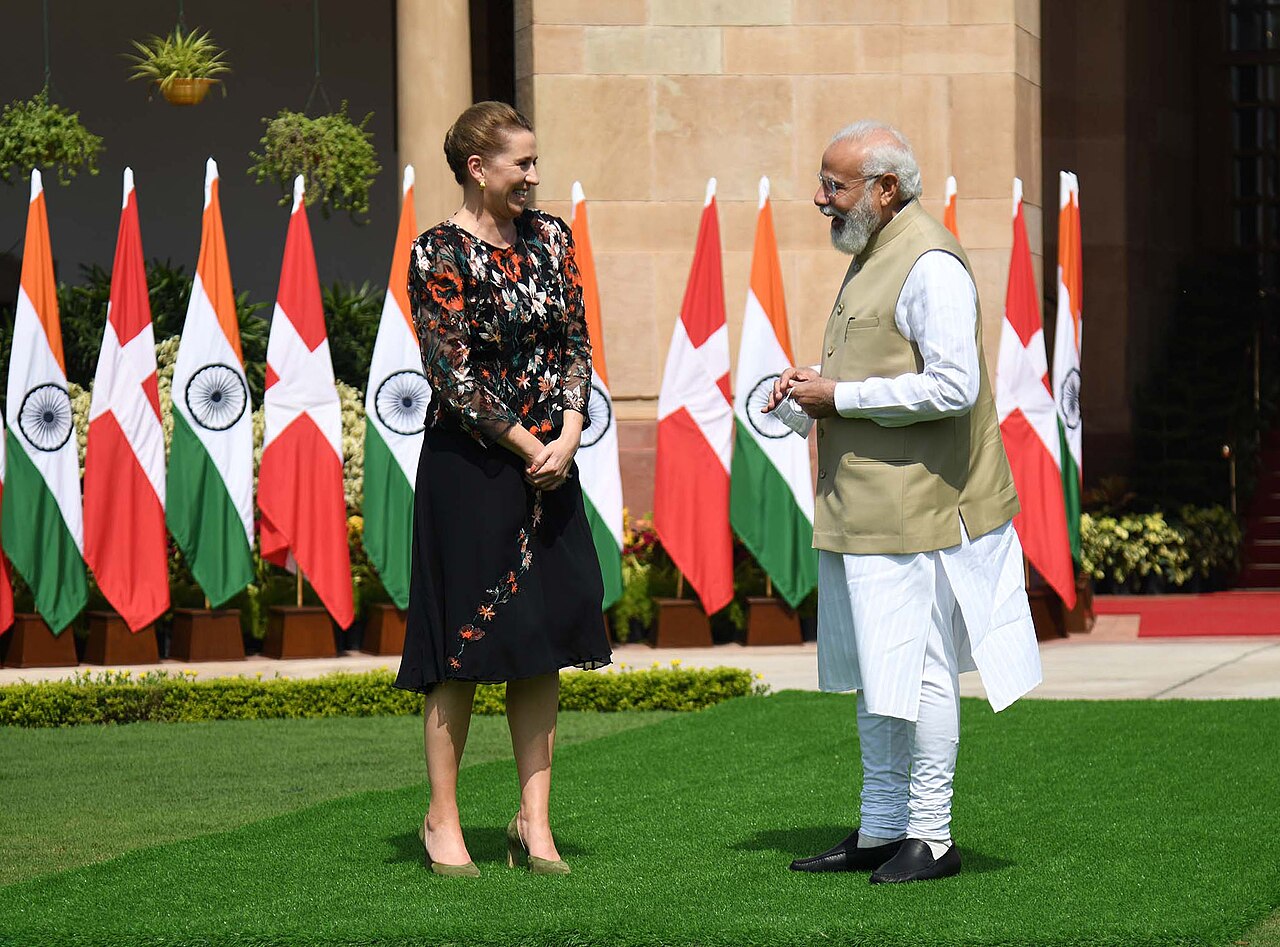
Image credit: Prime Minister’s Office, Government of India / Wikimedia Commons, GODL-India. Archival photograph of Narendra Modi and Mette Frederiksen meeting in October 2021; it is not a photograph of the November 28, 2026 Joint Commission Meeting. Licence: https://data.gov.in/sites/default/files/Gazette_Notification_OGDL.pdf