Guwahati, November 29, 2026: Researchers led by the Institute of Advanced Study in Science and Technology (IASST) have developed a region-specific antivenom candidate targeting two pit viper species found in Northeast India. The work addresses a gap in the coverage of India’s commercially available polyvalent antivenom, but the new candidate is not yet approved for routine patient treatment.
The research was announced by the Department of Science and Technology on November 25. The team was led by IASST director Professor Ashis K. Mukherjee, with collaborators from Premium Serums and Vaccines in Pune, Amrita Research Centre, Mizoram University and Aaranyak in Guwahati.
Which snakes does the new antivenom target?
The bivalent antivenom is designed against the venom of Pope’s pit viper (Trimeresurus popeiorum) and the red-tailed bamboo pit viper (Trimeresurus erythrurus). The venom samples used in the research were collected in Mizoram and Meghalaya.
It is described as an equine F(ab)2 antivenom. In simple terms, the antibodies are raised in horses and processed into antibody fragments that bind to venom components. The term “bivalent” means the formulation targets two venom sources.
Why a Northeast-specific formulation is being studied
India’s commercially marketed polyvalent antivenom is primarily formulated against the so-called Big Four: Russell’s viper, the spectacled cobra, the common krait and the saw-scaled viper. The Department of Science and Technology says its effectiveness against several medically important snakes found in the Northeast is limited.
Pit viper envenomation can disturb blood clotting and damage local tissue and organs. A formulation designed around regionally prevalent species could help address this treatment gap if it proves safe and effective in later stages of testing.
What the laboratory and preclinical tests found
According to the ministry’s announcement, laboratory and preclinical investigations showed better protection against envenomation by the two target pit vipers than the existing Indian polyvalent antivenom. The new formulation also reduced blood-coagulation disturbances and tissue injury in the studies reported by the research team.
The findings have been published in the International Journal of Biological Macromolecules (DOI: 10.1016/j.ijbiomac.2026.154578).
Why the antivenom is not ready for patients yet
The researchers and the ministry have said that further clinical and regulatory testing is required before the candidate can be used routinely. No clinical-trial timetable or commercial launch date has been announced. The development should therefore be understood as a research milestone, not as an available treatment.
Snakebite remains a medical emergency. This research announcement does not change current clinical protocols or replace urgent assessment and treatment at a health facility.
Sources and further reading
- Press Information Bureau: First Northeast India-specific antivenom developed against pit vipers
- India Today: IASST Guwahati develops antivenom for two Northeast pit vipers
- EastMojo: Northeast gets first region-specific pit viper antivenom
Related Infoflick coverage: CSIR-CDRI’s new high-containment research facility and NIMHANS’ new diagnostic technology.
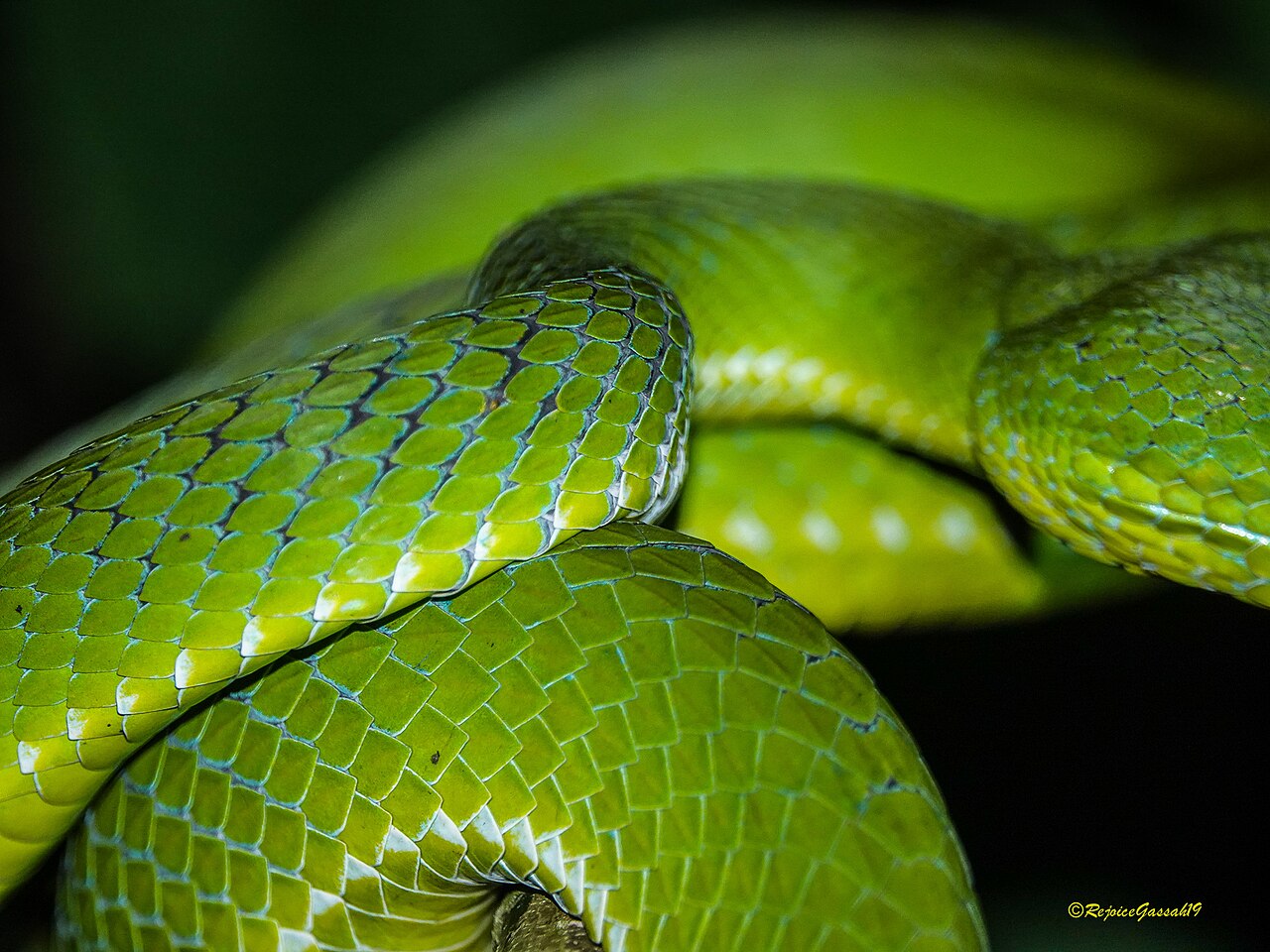
Image credit: Rejoice Gassah / Wikimedia Commons, CC BY 4.0. Photograph of Pope’s tree viper (Trimeresurus popeiorum), recorded in Arunachal Pradesh in 2019; it is not an image of the antivenom or a treatment scene. Licence: https://creativecommons.org/licenses/by/4.0/