New Delhi, November 28, 2026: India’s domestic economy is showing signs of continued momentum into the October-December quarter, but the Finance Ministry has warned that inflation could face fresh pressure from food demand, weather conditions and geopolitical risks affecting energy and shipping costs.
The Department of Economic Affairs’ November Monthly Economic Review said high-frequency indicators point to continued expansion in business activity, vehicle sales, rural consumption, goods movement and energy use. The review also discussed October retail inflation, which the National Statistics Office reported at 6.09% on a provisional basis.
Why the October inflation reading matters
October’s 6.09% Consumer Price Index reading was 55 basis points higher than September’s final rate of 5.54%. Food inflation rose to 8.94%, according to the Ministry of Statistics and Programme Implementation. The combined CPI reading moved above the Reserve Bank of India’s 6% upper tolerance level under the flexible inflation-targeting framework.
The Finance Ministry review attributed the rise to food prices and an unfavourable base effect. It cautioned that the festive season extending into November and the start of the wedding season could lift demand for food and non-food items.
Weather and West Asia add uncertainty
The Ministry pointed to the possibility of an exceptionally strong El Niño event towards the end of 2026, while noting that a positive Indian Ocean Dipole could partly offset its impact if it persists. These are risks, not confirmed forecasts of a specific crop or price outcome.
It also said continued conflict in West Asia and risks around the Strait of Hormuz could keep crude-import bills and maritime freight rates volatile. Higher energy and transport costs can feed into wholesale and retail prices if disruptions persist. There are possible buffers: the review noted that global crude benchmarks fell below $100 a barrel in early November and the rupee strengthened after capital inflows, although the relief depends on those trends lasting.
Growth indicators remain supportive, but exports need context
The review highlighted firm business activity and strong external-sector indicators. Merchandise exports reached a reported record of about $49.5 billion in October, up roughly 45% from a year earlier. However, a record export value does not by itself mean the trade gap narrowed: ICRA’s October trade update put merchandise imports at about $89.4 billion and the goods trade deficit at a 12-month high of roughly $39.9 billion.
A separate provisional release from the Ministry of Commerce and Industry showed the Index of Core Industries growing 10.9% year-on-year in October. Growth was led by iron ore, coal, electricity, cement, steel and refinery products; natural gas, crude oil and fertilisers recorded contractions. The cumulative April-October growth rate was 6.0%, compared with 2.3% in the same period a year earlier.
What households and businesses should watch
For households, the immediate issue is whether food and transport costs remain elevated in the coming months. For businesses, the review points to a combination of resilient demand and uncertain input costs. The eventual effect will depend on weather, supply conditions, energy prices and how long shipping risks persist.
The government is due to release GDP data for the July-September quarter on Monday, November 30. The monthly review’s high-frequency indicators are useful context, but they are not a substitute for the official quarterly GDP estimate.
Readers can follow Infoflick’s related coverage of foreign investment flows and the rupee and Maharashtra’s proposed infrastructure-finance institution.
Sources
- Department of Economic Affairs: Monthly Economic Review reports
- The Indian Express: Finance Ministry flags inflation risks, November 28, 2026
- MoSPI: Official October 2026 Consumer Price Index release
- PIB, Ministry of Commerce and Industry: Provisional Index of Core Industries for October 2026
- ICRA: October 2026 merchandise trade and current-account update
- Business Standard: Finance Ministry’s November economic review
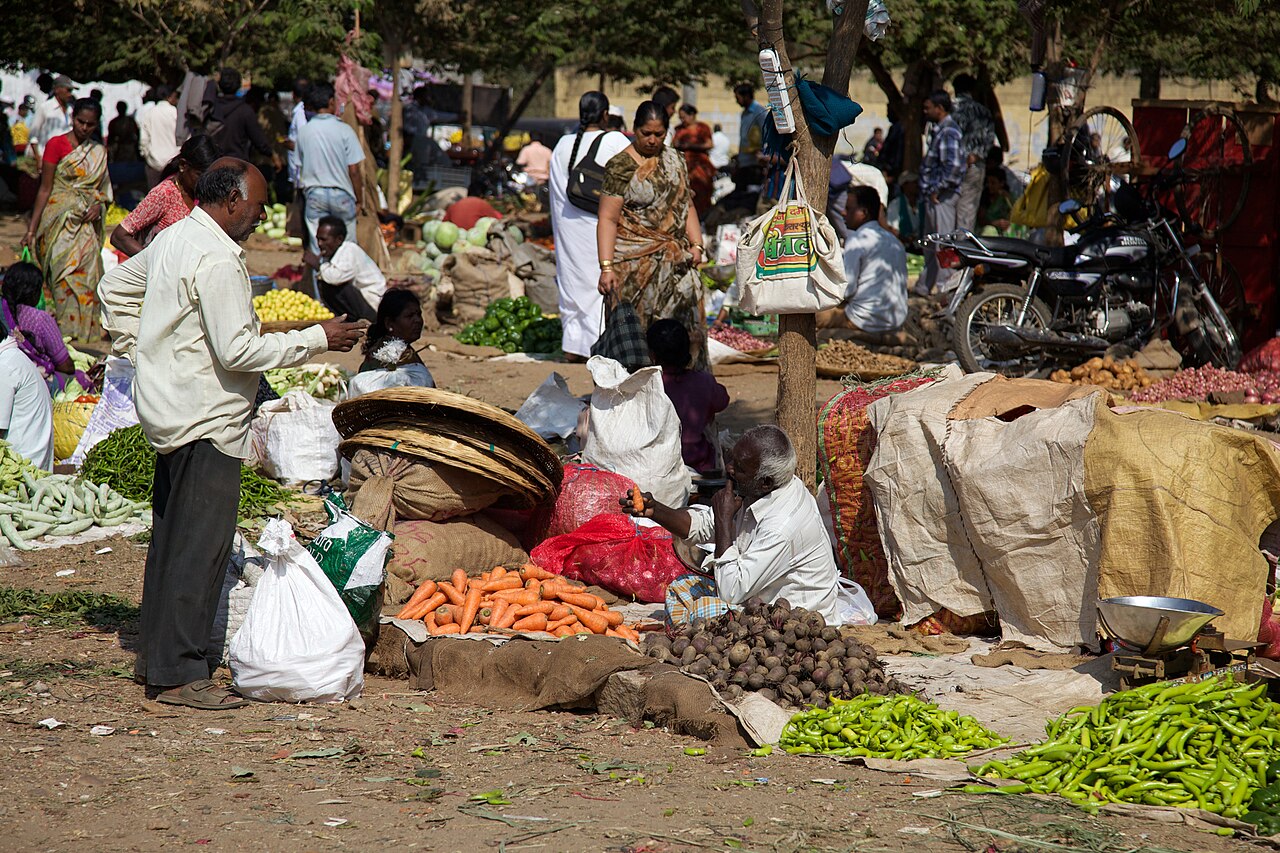
Featured image credit: Archival Mysuru vegetable-market photograph by David Brossard, Wikimedia Commons, CC BY-SA 2.0. Illustrative only; not a current price survey. Source file · Licence.