India’s National HPV Vaccination Campaign has crossed the one-crore-dose milestone in less than nine months, the Ministry of Health and Family Welfare said on November 21, 2026. The programme has reached nearly 87% of its identified annual target cohort of around 1.2 crore girls aged 14.
The campaign was launched in February 2026 and provides a free, voluntary single dose of HPV vaccine to eligible 14-year-old girls at designated government health facilities, with parental consent. The milestone is a significant expansion of India’s public-health effort to prevent infections that can lead to cervical cancer.
Six states report full coverage of their identified target groups
According to the Ministry, Gujarat, Uttar Pradesh, Andhra Pradesh, Mizoram, Madhya Pradesh and Bihar have each reached 100% coverage of their identified target populations. Uttar Pradesh leads in the number of girls vaccinated, with more than 29.33 lakh, followed by Bihar at 13.70 lakh and Gujarat at 7.75 lakh.
Several other states have also reported high coverage. Assam stands at 95.63%, Telangana at 95.28%, Karnataka at 93.16% and Uttarakhand at 90.17%, according to the figures released by the Ministry. These percentages refer to the states’ identified target populations, not to all girls or women in those states.
How the U-WIN platform supports the campaign
The Ministry said the U-WIN digital platform is being used for beneficiary tracking, real-time monitoring, vaccination-slot booking and digital certificates. The system is intended to help programme managers identify areas where eligible girls have not yet been reached and plan follow-up sessions.
Vaccination sessions are being conducted under the supervision of trained medical officers, with arrangements for assessment and management of rare adverse events following immunisation, the Ministry said.
Why HPV vaccination matters
Persistent infection with certain high-risk types of human papillomavirus (HPV) is the main cause of cervical cancer. Vaccination before exposure to the virus can prevent many HPV infections and reduce the risk of related cancers. The World Health Organization says vaccination is a key part of cervical-cancer prevention, alongside screening and timely treatment.
Vaccination does not replace cervical screening. WHO guidance continues to recommend screening because HPV vaccines do not cover every cancer-causing type. Families should use official government health facilities and qualified healthcare professionals for programme-specific information.
For more public-health updates, visit Infoflick Health.
Sources
- Press Information Bureau, Ministry of Health and Family Welfare: one-crore HPV dose milestone, November 21, 2026
- NewsDrum: coverage details and state-wise progress, November 21, 2026
- World Health Organization: cervical cancer prevention and screening guidance, November 10, 2026
This report summarises the national programme. It is not individual medical advice.
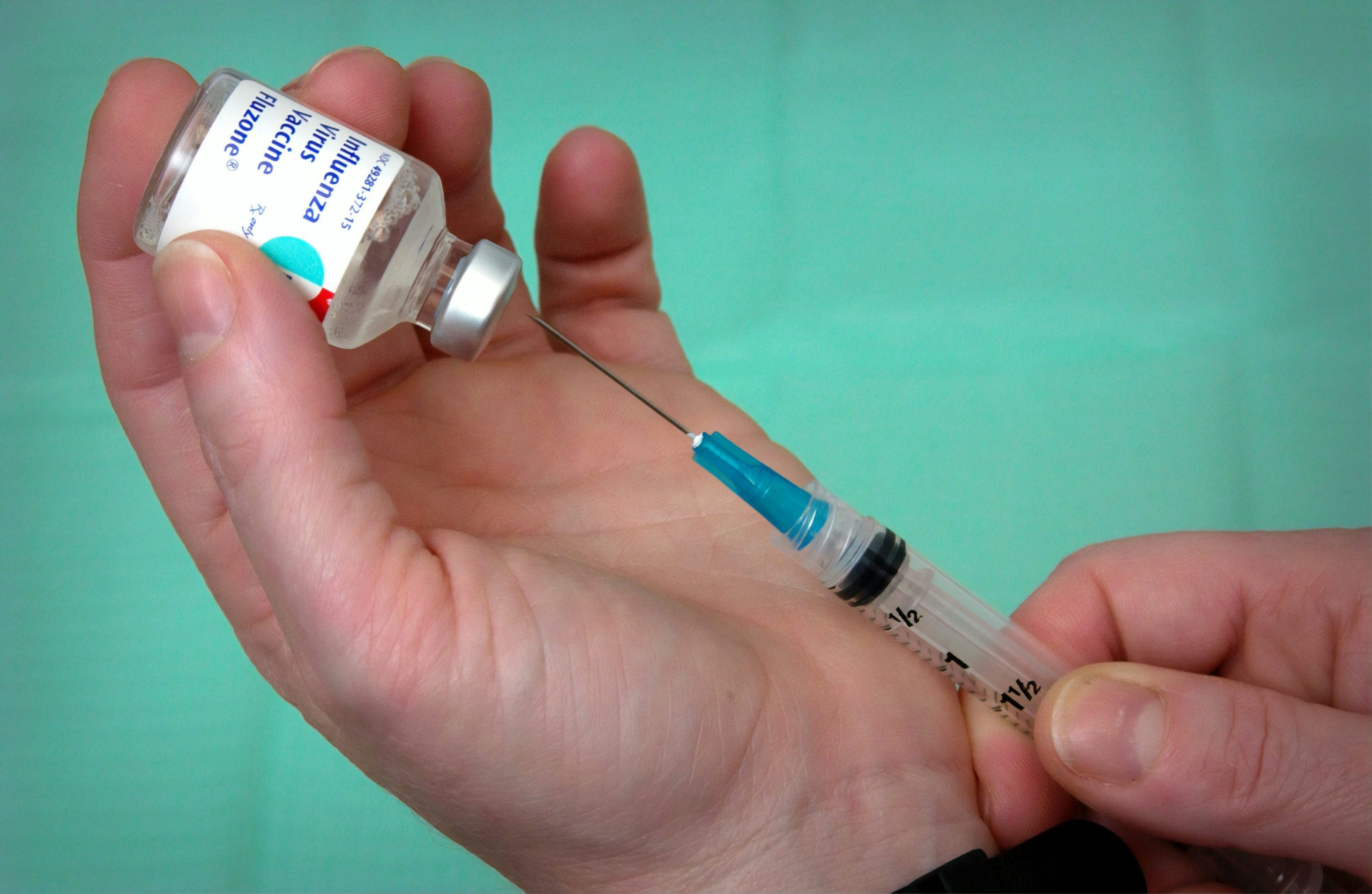
Featured image: CDC via Unsplash, used under the Unsplash License. The photograph shows an influenza vaccine being drawn from a vial and is illustrative only; it is not the HPV vaccine used in India’s campaign.