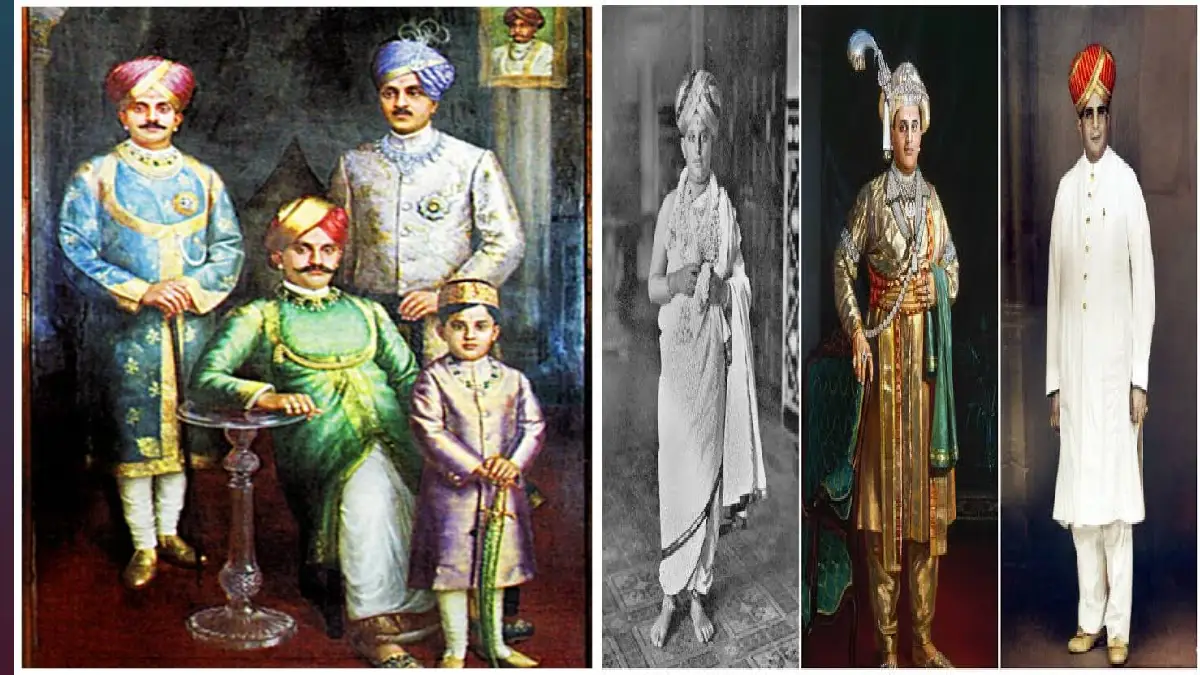
The history of Mysuru is closely tied to the Wadiyar dynasty, whose rulers helped shape the region’s administration, architecture, arts and public institutions. The kingdom changed considerably over several centuries, from a regional power to a princely state under British paramountcy. Here is a brief introduction to some of the rulers most often associated with Mysore’s legacy.
Raja Wadiyar I (1578–1617)
Raja Wadiyar is remembered for expanding the family’s influence and making Mysore a more prominent political centre. In 1610, he took control of Srirangapatna, an event commonly connected with the beginnings of the Dasara tradition under the Wadiyars. The festival’s royal ceremonies developed over time, but the dynasty’s association with Dasara became one of Mysuru’s enduring cultural identities.
Chikka Devaraja Wadiyar (1673–1704)
Chikka Devaraja Wadiyar strengthened the kingdom’s administration and revenue systems and expanded its influence. His reign is often described as an important period of centralisation. Mysore’s growth during this era also involved military and political changes in a region where neighbouring powers competed for territory and influence.
Krishnaraja Wadiyar III (1799–1868)
After the defeat of Tipu Sultan in 1799, the Wadiyar dynasty was restored to the Mysore throne under British supervision, with the young Krishnaraja Wadiyar III installed as ruler. His long reign included periods of direct British administration and later restoration of authority to the Maharaja. He was also associated with literature, music, painting and traditional scholarship.
Chamarajendra Wadiyar X (1868–1894)
Chamarajendra Wadiyar X ruled during a period when Mysore’s modern administrative institutions were developing. Since he was young when he became Maharaja, the state was administered by a regency for part of his early reign. His period is remembered as part of the transition toward a more modern princely administration.
Krishnaraja Wadiyar IV (1894–1940)
Often described as one of Mysore’s most influential modern rulers, Krishnaraja Wadiyar IV presided over advances in education, public health, infrastructure and industry. Under his reign, Mysore became associated with planned development and public institutions. The contributions of Dewan Sir M. Visvesvaraya and later administrators also helped build this reputation. The Maharaja’s patronage of music and the arts remains significant.
Jayachamarajendra Wadiyar (1940–1974)
The last ruling Maharaja of Mysore before the integration of princely states into independent India, Jayachamarajendra Wadiyar was known for his interest in music, philosophy and culture. Mysore joined the Indian Union in 1947, and the princely state’s constitutional role later ended as India reorganised its political structure.
A legacy beyond the throne
The Wadiyars’ legacy can be seen in Mysore Palace, cultural patronage, public institutions and the continuing celebration of Dasara. The story is not only a succession of rulers: it also reflects the influence of administrators, artists, reformers and the people of the region. Visiting the palace and local museums offers a useful starting point for understanding this layered history.