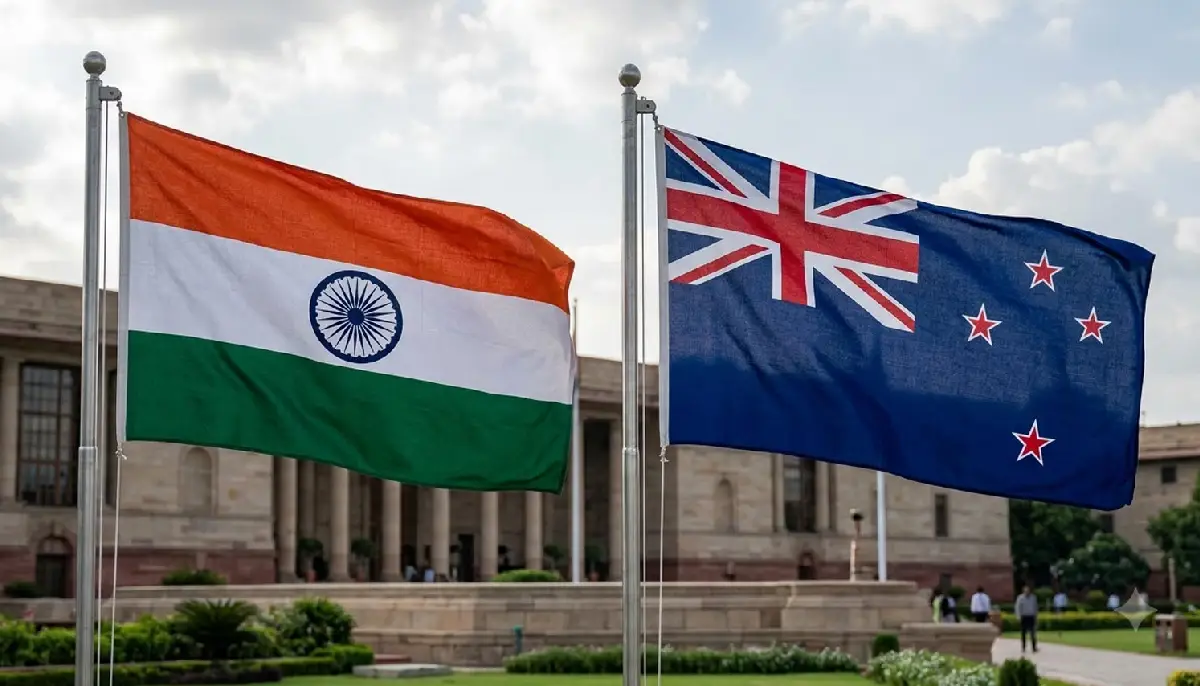
The India-New Zealand Free Trade Agreement (FTA) is set to come into force on October 20, 2026, coinciding with Vijay Dashami. The agreement is expected to strengthen trade and economic ties between the two countries and provide Indian exporters with expanded access to the New Zealand market.
A key feature of the agreement is the provision for 100% duty-free access for Indian exports to New Zealand. This means Indian goods covered by the agreement will be able to enter the New Zealand market without customs duties, improving their price competitiveness and potentially creating new opportunities for exporters.
What Does the Trade Agreement Mean for India?
The FTA is designed to reduce or eliminate tariffs on goods traded between India and New Zealand. For Indian businesses, duty-free access can lower the landed cost of exports and make products more competitive compared with goods from countries that face higher tariffs.
Indian sectors that could benefit from improved market access include textiles and apparel, pharmaceuticals, engineering goods, chemicals, agricultural products, food products and other manufactured goods, subject to the specific provisions and rules of the agreement.
The agreement could also encourage greater participation from small and medium-sized Indian businesses looking to expand into the New Zealand market.
Why October 20 Is Significant
The agreement’s implementation date falls on Vijay Dashami, an important Indian festival traditionally associated with new beginnings and the triumph of good over evil. The timing gives the trade pact additional symbolic significance as India and New Zealand begin a new phase of economic cooperation.
For exporters, however, the practical impact will depend on product-specific rules, documentation requirements, rules of origin and the implementation procedures established under the agreement.
Benefits for Indian Exporters
Duty-free access can help Indian exporters by reducing tariff-related costs and potentially improving demand for Indian products in New Zealand. Businesses may also gain greater certainty when planning long-term export strategies.
The agreement could be particularly relevant for sectors where tariffs previously affected the competitiveness of Indian products. Increased trade may also support investment, business partnerships and supply-chain cooperation between companies in both countries.
What Indian Businesses Should Check
Exporters planning to use the FTA should examine the agreement’s rules of origin, product-specific tariff schedules, certification requirements and customs procedures. Not every product necessarily receives identical treatment, and businesses will need to comply with the conditions applicable to their goods.
Companies should also review New Zealand’s import standards, labelling requirements and other regulatory rules before expanding exports.
The implementation of the India-New Zealand FTA on October 20 could mark an important development in bilateral economic relations. With duty-free market access for Indian exports, the agreement is expected to create new opportunities for businesses while strengthening trade links between the two countries.