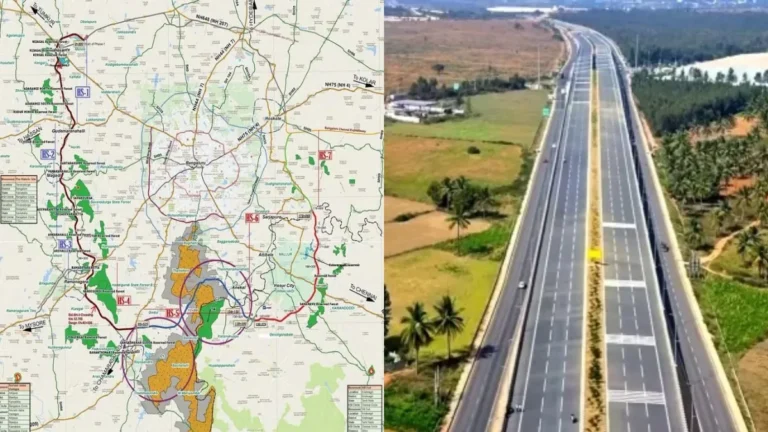
Karnataka Deputy Chief Minister DK Shivakumar is pushing for a broader urban development vision aimed at reducing Bengaluru’s growing pressure by creating new economic and employment centres across the state. The initiative, widely described as the “Beyond Bengaluru” vision, seeks to develop multiple cities into strong alternatives to the state capital.
With Bengaluru facing increasing challenges related to traffic congestion, infrastructure pressure, rising real estate costs and rapid population growth, the Karnataka government is looking at ways to distribute economic activity more evenly across the state.
Beyond Bengaluru Vision
The core idea behind the Beyond Bengaluru initiative is to encourage industries, technology companies, startups and other businesses to expand into cities beyond Bengaluru. This could help create new employment opportunities while supporting balanced regional development.
Shivakumar has indicated that Karnataka should not depend entirely on Bengaluru for economic growth. Instead, cities across the state could be developed according to their individual strengths, infrastructure and geographical advantages.
The approach could potentially transform cities such as Mysuru, Mangaluru, Hubballi-Dharwad, Belagavi, Tumakuru and other emerging urban centres into important economic hubs.
Reducing Pressure on Bengaluru
Bengaluru has established itself as one of India’s leading technology and startup destinations. However, its rapid growth has also created significant infrastructure challenges.
Traffic congestion, limited road capacity, water-related concerns, increasing housing costs and pressure on public infrastructure have become major concerns for residents and businesses.
Creating alternative economic centres could help reduce the concentration of people and companies in Bengaluru. It could also allow businesses to access skilled workers and infrastructure at potentially lower costs.
New Economic Engines for Karnataka
The Beyond Bengaluru strategy is expected to focus on developing cities based on their existing strengths. Technology and IT services could expand in some locations, while manufacturing, tourism, education, logistics and other sectors could become key drivers elsewhere.
Improved connectivity, industrial infrastructure, digital infrastructure and investment-friendly policies will be important if the government wants these cities to compete with Bengaluru.
The development of new economic centres could also create opportunities for local entrepreneurs and businesses, potentially reducing the need for young professionals to move to Bengaluru in search of employment.
Karnataka’s Urban Development Challenge
Building successful alternatives to Bengaluru will require long-term planning rather than simply creating new infrastructure. Cities will need reliable public transport, housing, healthcare, education, employment opportunities and quality civic services.
Experts have often highlighted that economic decentralisation can be successful only when companies and workers have sufficient reasons to relocate outside the primary metropolitan hub.
If implemented effectively, the Beyond Bengaluru vision could reshape Karnataka’s economic geography and create multiple growth centres across the state.
For Shivakumar and the Karnataka government, the challenge will now be turning the vision into sustainable projects that attract investment, create jobs and improve the quality of life beyond Bengaluru.