
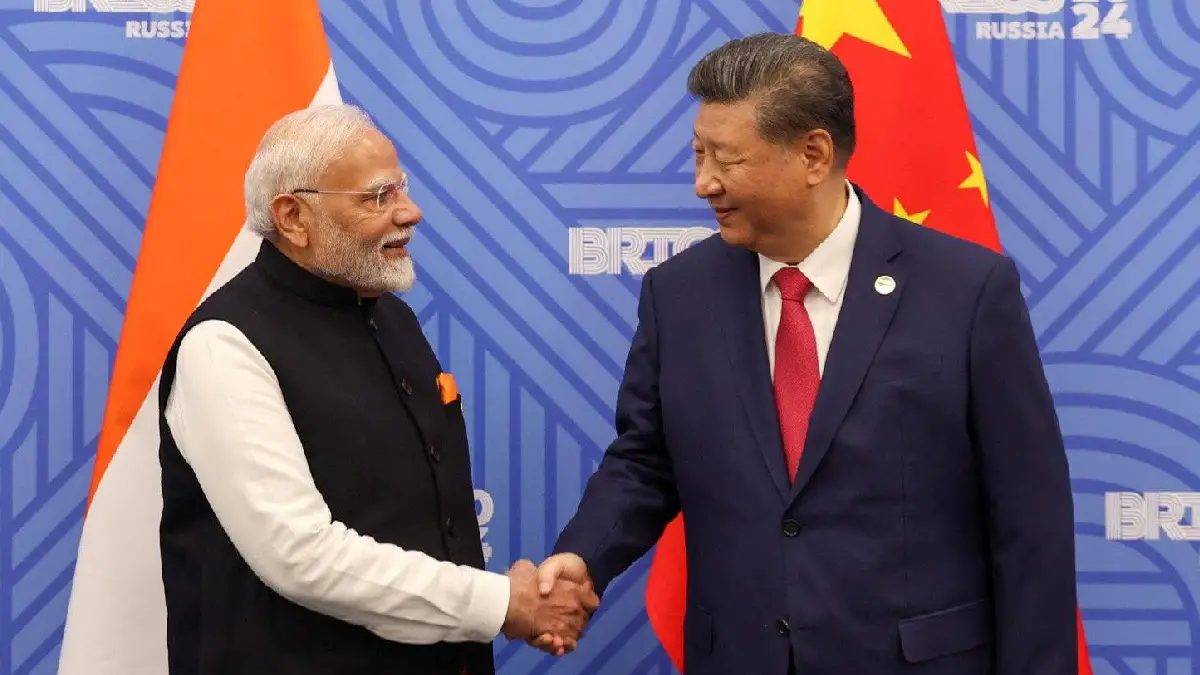
Prime Minister Narendra Modi and Chinese President Xi Jinping held a significant bilateral meeting in New Delhi on Saturday on the sidelines of the 18th BRICS Summit. The talks focused on improving India-China relations, maintaining peace along the border and addressing economic and trade concerns.
Xi’s visit marks his first trip to India in seven years and comes as both countries attempt to stabilise relations following years of tension after the 2020 Galwan Valley clash.
1. Border Peace Remains a Priority
PM Modi stressed that peace and tranquillity along the India-China border are essential for the continued development of bilateral relations. Both leaders agreed that existing border-management agreements should be respected and that differences should not turn into disputes.
The two sides also reiterated their commitment to finding a fair, reasonable and mutually acceptable solution to the boundary question.
2. Push to Address Trade Imbalance
Trade was another major issue discussed during the Modi-Xi meeting. India and China have maintained strong commercial ties despite political tensions, but the relationship remains heavily tilted in China’s favour.
Bilateral trade reached record levels in 2025, while India’s imports from China significantly exceeded its exports. Both sides discussed structural trade imbalances, supply-chain concerns and the need for predictable market access.
3. Greater Market Access
India is seeking better access to the Chinese market for Indian products and businesses. Greater market access could help Indian exporters reduce the trade deficit and create new opportunities for sectors seeking to expand their presence in China.
The discussions also included supply-chain cooperation and business connectivity.
4. Business and Economic Cooperation
The leaders highlighted the importance of expanding business linkages and economic cooperation. India and China have significant commercial potential, although strategic concerns and restrictions have complicated business relations in recent years.
A more stable political relationship could provide greater predictability for companies operating in both countries.
5. People-to-People Exchanges
The two countries are also working towards strengthening cultural and people-to-people contacts. Travel, pilgrimage and other exchanges have gradually resumed as relations have improved.
Both sides have previously taken steps towards restoring direct flights, visas and border trade, contributing to the broader diplomatic thaw.
6. Strategic and Long-Term Relationship
Modi and Xi agreed on the importance of viewing India-China relations from a strategic and long-term perspective. The emphasis is on managing differences while identifying areas where cooperation remains possible.
7. Cautious Reset in Relations
The meeting represents another step in the gradual improvement of India-China relations. However, significant challenges remain, particularly the unresolved boundary dispute, military deployments and the large trade imbalance.
The Modi-Xi talks therefore signal a cautious attempt to reset bilateral ties, rather than an immediate resolution of all outstanding differences.