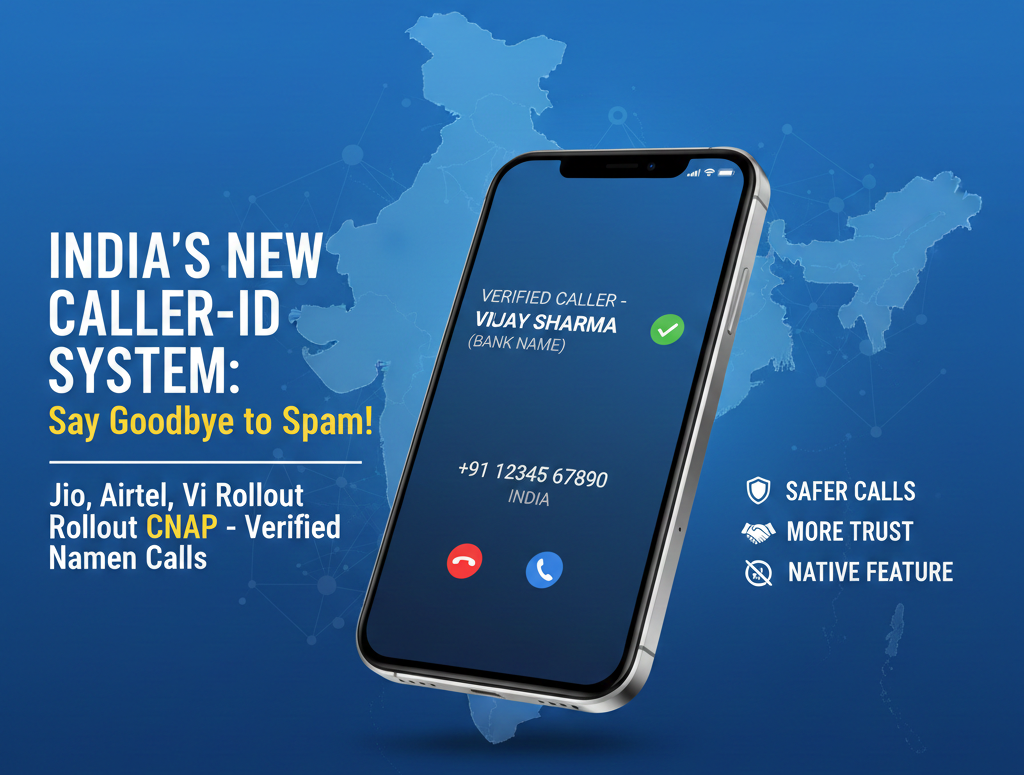
India’s Department of Telecommunications (DoT) has directed telecom operators to roll out Calling Name Presentation (CNAP) from November 1, 2026, according to reports citing a circular dated October 13. The service is designed to show a caller’s name alongside the phone number for incoming calls from numbers that are not saved in the recipient’s contacts.
How will caller-name display work?
For a domestic number that is not saved in the receiver’s contact list, the name recorded in the caller’s telecom subscriber records is expected to appear with the number. If the receiver has saved the number, the name in their own contacts will generally be displayed instead.
Will users need to install an app?
The reported directive says operators should enable the service by default on eligible networks, rather than requiring users to sign up for a separate application. The initial rollout is for wireless networks using 4G and newer generations. Treatment of 2G, 3G and fixed-line networks is to be considered separately.
Does caller ID eliminate scam calls?
No caller-identification system can guarantee that a call is safe. CNAP may help recipients see the registered subscriber name, but consumers should still be careful with requests for OTPs, passwords, banking details or urgent money transfers. A displayed name is not proof that a caller’s request is legitimate.
What about privacy and business names?
Reports say the system will use subscriber records maintained by telecom operators and include safeguards around the handling of name and number information. Business and bulk-user name display may be subject to verification. Users should consult their operator’s official instructions for details and complaint channels.
When does the rollout begin?
The reported nationwide start date is November 1, 2026, for eligible networks. Operators may issue additional implementation guidance as the date approaches.
SEO keywords: caller name display November 1, CNAP India, DoT caller ID rules, caller name presentation, unknown calls India.