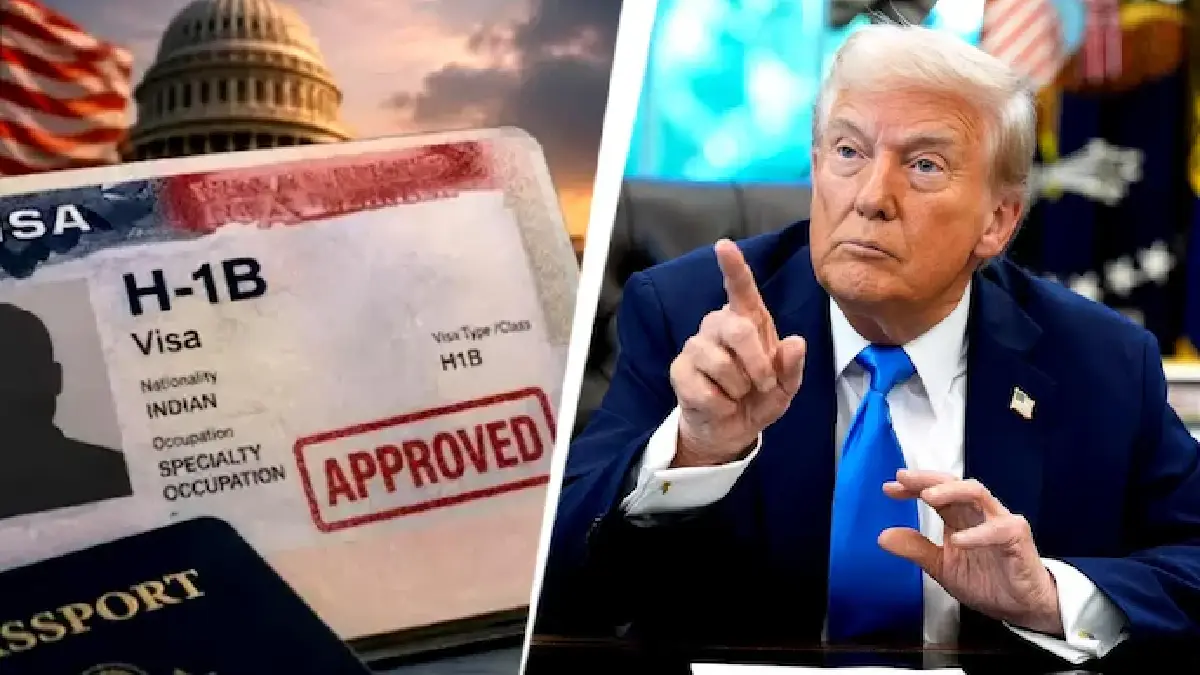
The Donald Trump administration has introduced fresh changes to US immigration policy that could affect thousands of Indian professionals and their families living and working in America. The developments involve the renewal of Employment Authorisation Documents (EADs) and a proposed change to how immigration officials assess visa extension applications, including H-1B work visas.
Announced in October 2026, the measures could increase uncertainty for Indian workers, particularly spouses of skilled professionals and employees seeking to extend their stay in the United States.
US Ends Automatic Work Permit Extensions
The US Department of Homeland Security (DHS) finalised a rule on October 14, 2026, confirming the end of automatic extensions for certain employment authorisation documents.
Previously, eligible applicants who submitted their EAD renewal applications on time could continue working for up to 540 days after their existing permits expired while waiting for a decision. Under the revised policy, filing a renewal application generally no longer allows eligible workers to continue working beyond the permit’s expiry date.
The rule applies to relevant renewal applications filed on or after October 30, 2025. Certain extensions already granted to qualifying applicants who filed before that date remain protected under the applicable provisions.
The administration says the change will strengthen background checks, eligibility verification and security screening before renewed work authorisation is granted.
Why Indian H-1B Families Could Be Affected
Indian nationals could be particularly affected because many work in the US under employment-based immigration programmes, while their spouses may depend on separate work permits.
Certain spouses of H-1B visa holders qualify for H-4 employment authorisation. If an eligible spouse’s EAD expires before the renewal is approved, the individual may have to stop working temporarily, potentially affecting household income and employment continuity.
Applicants should check their EAD category, expiry date and eligibility for any existing extension rather than assuming that filing a renewal automatically permits continued employment.
Proposed Visa Extension Rule Could Increase Scrutiny
Separately, the Trump administration has proposed ending the practice of giving deference to previous visa approvals when reviewing certain extension petitions.
Under the existing approach, immigration officers generally give weight to earlier approvals when an applicant’s circumstances have not materially changed. If the proposal is adopted, officials could reassess more applications, including eligible H-1B and L-1 extension petitions, potentially increasing scrutiny, documentation requirements and processing uncertainty.
However, this visa-extension change is a proposal, not a final rule. Its eventual impact will depend on the final policy and implementation details.
What Indian Professionals Should Do
Indian workers and their employers should monitor expiry dates, begin renewal preparations early and consult qualified immigration counsel when necessary. EAD holders should also confirm whether their category qualifies for any applicable exception or previously granted extension.
H-1B visa status, visa-stamp validity and EAD work authorisation are different matters. The new EAD rule does not automatically cancel every H-1B visa or require all Indian professionals to leave the United States.
The bottom line is that the changes could make employment continuity and visa renewals more complicated for some Indian families. Understanding which rule applies to an individual’s immigration category is essential before making employment or travel decisions.