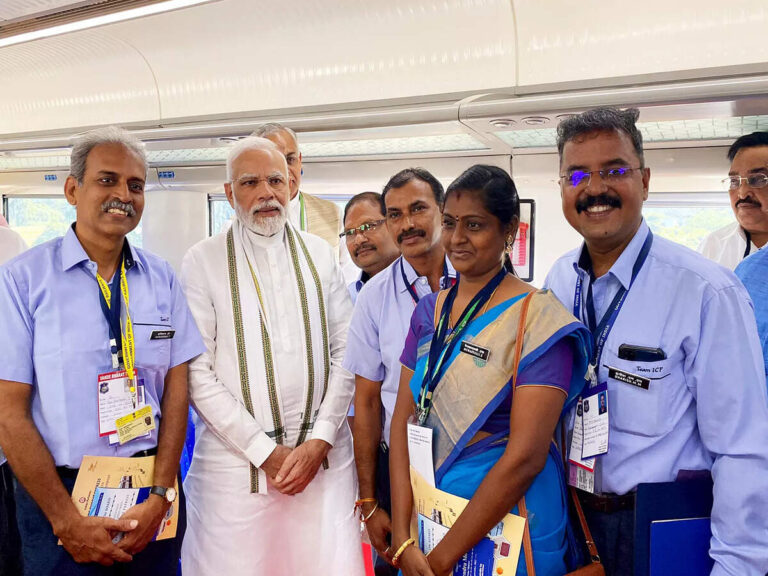
Prime Minister Narendra Modi and Chinese President Xi Jinping are set to hold closely watched bilateral talks on the sidelines of the 18th BRICS Summit in New Delhi, as India and China attempt to move their relationship from confrontation towards cautious engagement. Xi’s visit is particularly significant as it is his first trip to India in nearly seven years.
The meeting comes after years of strained relations following the deadly 2020 Galwan Valley clash, which severely damaged political trust and disrupted economic and people-to-people ties. Since then, both countries have gradually worked to stabilise the relationship, with the 2024 disengagement agreement becoming an important turning point.
From Border Tensions to Cautious Thaw
India-China relations have improved incrementally since the two sides reached arrangements for disengagement along parts of the Line of Actual Control. High-level political and diplomatic contacts have also resumed.
In August 2026, Indian National Security Adviser Ajit Doval and Chinese Foreign Minister Wang Yi held the 25th round of Special Representatives’ talks on the boundary question. The two sides agreed to strengthen border-management mechanisms, add military hotline channels and continue negotiations aimed at finding a long-term solution to the boundary dispute.
Direct flights have also resumed, while the Kailash Mansarovar Yatra restarted after a lengthy suspension. These steps indicate that both governments are attempting to rebuild practical engagement even though the fundamental border dispute remains unresolved.
Trade Remains a Major Issue
Economic relations are another important part of the Modi-Xi discussions. India and China remain major trading partners, but the relationship is heavily imbalanced in China’s favour. India is seeking greater market access and more balanced trade while remaining cautious about Chinese investment in strategically sensitive sectors.
At the same time, China’s importance in India’s supply chains means that completely separating the two economies is neither simple nor necessarily desirable. Recent developments suggest that both sides are exploring a more pragmatic economic relationship while maintaining national-security safeguards.
What Does the Future Hold?
The Modi-Xi meeting is unlikely to resolve the border dispute overnight. However, it could help establish a framework for managing differences while expanding cooperation in trade, travel, connectivity and multilateral forums such as BRICS.
For India, the objective appears to be stability without compromising security interests. For China, improving ties with India could strengthen cooperation within BRICS and reduce tensions with a major Asian power.
The relationship therefore appears to be moving from open confrontation to cautious coexistence. The latest engagement is a positive development, but lasting improvement will ultimately depend on progress along the border, greater economic balance and rebuilding mutual trust