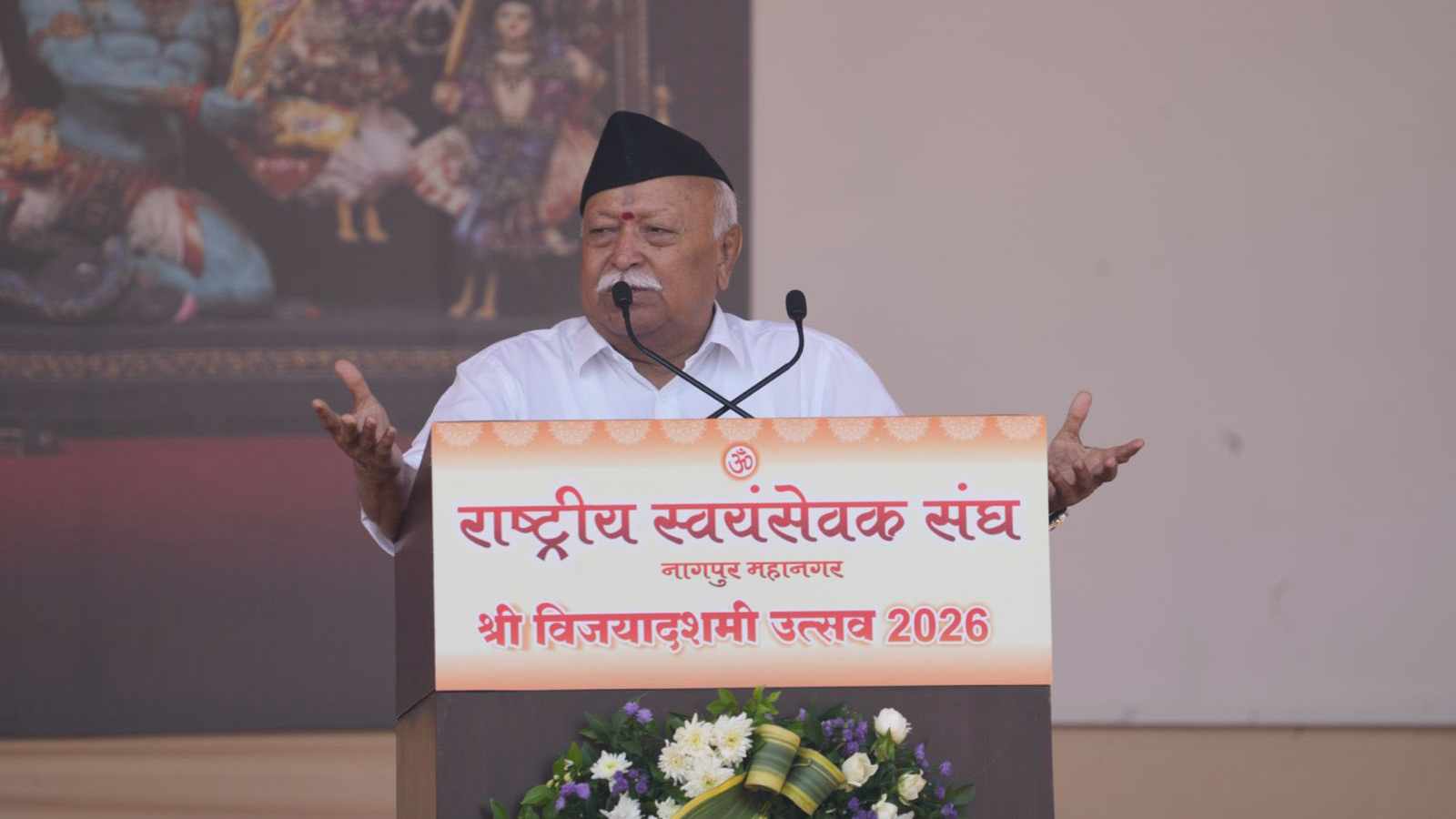
Rashtriya Swayamsevak Sangh (RSS) chief Mohan Bhagwat on Tuesday, October 20, said that attempts to weaken or dismantle India would not succeed, adding that a change of political regime would not automatically resolve the country’s challenges. His remarks came during the organisation’s Vijayadashami address in Nagpur.
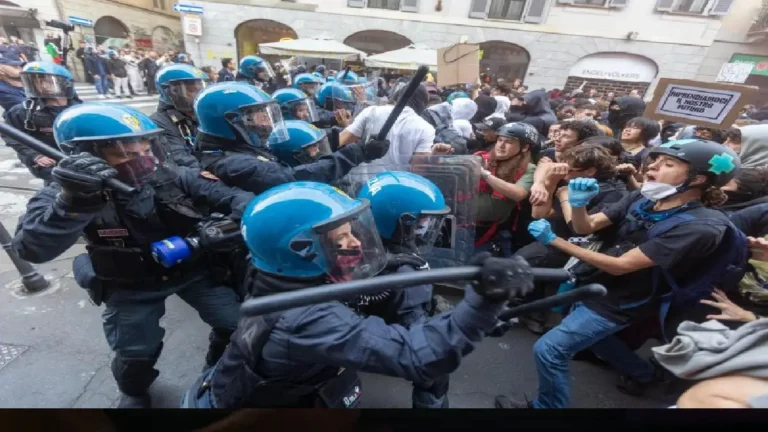
Bhagwat referred to what he described as forces seeking to disrupt India’s social and national fabric. He argued that the country’s resilience depended on public responsibility, social cohesion and a shared sense of national identity. His comments followed a debate around the phrase “regime change”, which had recently appeared in public discussion surrounding protests and political disagreements.
Call for unity and responsibility
The RSS chief’s address focused on the importance of maintaining social harmony and approaching public issues with a sense of responsibility. He said protests are part of democratic life, but argued that demonstrations should aim to address problems rather than deepen divisions. The broader message, as reported from the event, was that long-term solutions must come from within society and through constructive participation.
Bhagwat also highlighted the importance of India’s diversity and the need to preserve social bonds across regions, languages, communities and traditions. His remarks reflected the RSS’s stated emphasis on cultural identity and collective organisation. However, his description of external or “evil” forces represents his assessment, not an independently established finding about a specific conspiracy.
Political context
The comments have drawn attention because they come amid continuing discussions about electoral processes, protests and the relationship between political leadership and civil society. The phrase “regime change” can refer to very different political outcomes, from an ordinary democratic transfer of power to efforts to remove a government outside established constitutional processes. These distinctions matter when interpreting political speeches.
India’s constitutional framework provides for governments to change through elections and other lawful democratic procedures. Political disagreement and peaceful protest are also features of democratic participation. Bhagwat’s statement should therefore be understood as a political and ideological position delivered at a major annual RSS event, rather than as a formal government announcement.
Why the speech matters
The Vijayadashami address is an important annual occasion for the RSS, where its chief outlines the organisation’s priorities and views on national affairs. This year’s remarks are likely to prompt further discussion about unity, public protest, national identity and the role of civil society.
Readers should follow full transcripts and multiple reliable reports for context, particularly where brief quotations are circulated on social media. The exact wording and surrounding passages can shape how such statements are understood.
InfoFlick will update this report if further verified details from the address become available.