
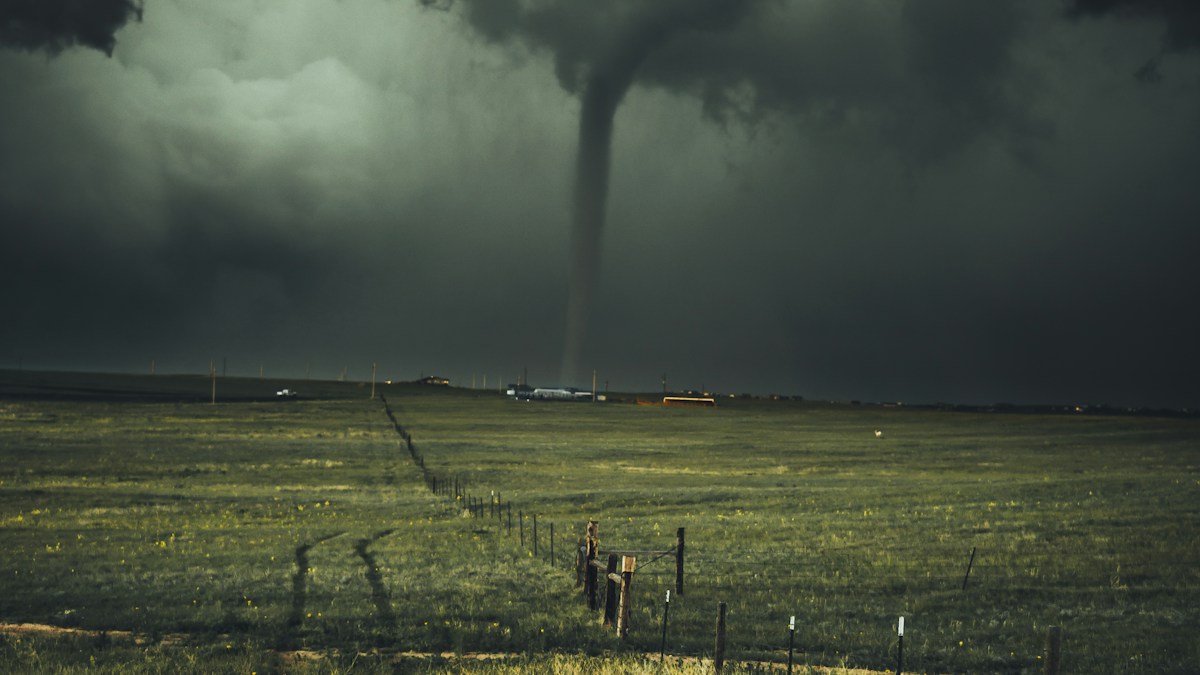
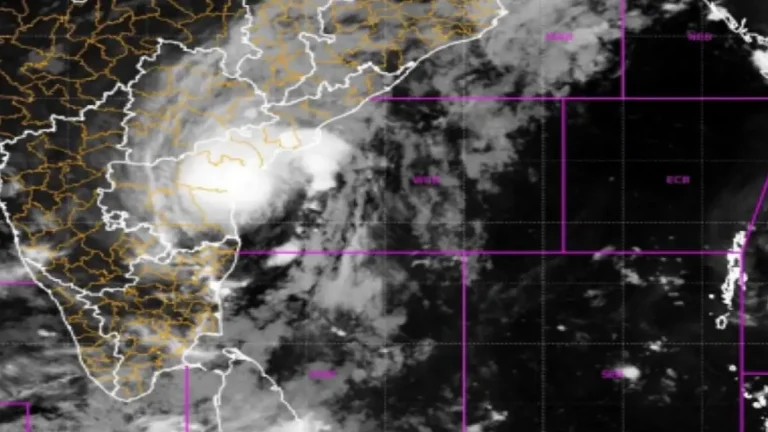
Cyclone Murasu crossed the south Andhra Pradesh coast early on Tuesday, November 3, bringing heavy rain and strong winds to parts of the state. The India Meteorological Department reported sustained wind speeds of around 100–110 kmph, with gusts reaching approximately 120 kmph during the landfall process. The storm formed over the Bay of Bengal and moved towards the coast, prompting emergency preparations across vulnerable districts.
Landfall and immediate impact
Reports from Reuters and the Associated Press said the cyclone made landfall near the south Andhra coast, with the storm affecting areas around the Nellore–Ongole coastal belt. Strong winds uprooted trees and damaged power infrastructure in some locations. Heavy rainfall created the risk of waterlogging and flooding, particularly in low-lying settlements and areas close to rivers, canals and drainage channels.
Authorities had begun precautionary evacuations before landfall. Transport services were disrupted, with some train operations and flights affected as a safety measure. Schools and educational institutions in several vulnerable districts were also closed. Officials urged residents to remain indoors during periods of intense wind and rain and to avoid unnecessary travel until local authorities confirmed that conditions had improved.
Warnings across neighbouring states
The weather system is also influencing conditions beyond Andhra Pradesh. The IMD has warned of heavy rainfall in parts of Telangana, Tamil Nadu, Odisha and Chhattisgarh. Coastal areas may experience rough seas and strong winds, while rainfall could lead to localised flooding, traffic disruption and temporary interruptions to power and communication services.
Fishermen have been advised not to venture into the sea while hazardous conditions persist. People living in coastal and low-lying areas should follow district-level instructions, keep away from swollen streams and avoid standing near trees, electric poles or damaged power lines. Residents should use official weather bulletins and government alerts rather than unverified social media messages for safety decisions.
Relief and restoration work
State and district authorities are coordinating emergency response, including evacuation support, road clearance and restoration of essential services. Teams may need to remove fallen trees, inspect electrical infrastructure and assess damage to homes, roads and agricultural land once conditions allow safe access. The full impact of the cyclone will become clearer after field assessments are completed.
Residents should keep essential medicines, drinking water, charged phones, power banks and basic emergency supplies ready. If water enters a home, switch off the electricity only if it is safe to do so and do not touch fallen wires. People should not attempt to cross flooded roads or move through fast-flowing water, even if the depth appears shallow.
Cyclone Murasu is expected to weaken after landfall, but weakening does not mean the danger has ended. Rain bands, gusty winds and waterlogging can continue after the centre moves inland. Follow the latest IMD bulletins and instructions issued by local administrations until the warning is officially withdrawn.
Sources: Reuters; Associated Press; India Meteorological Department bulletin.


Comments