
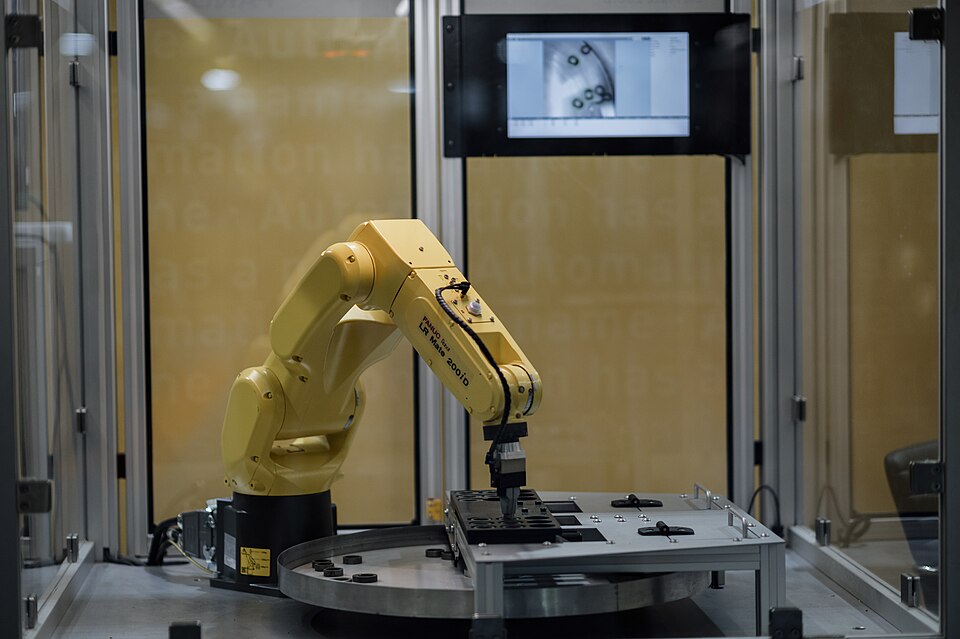
PwC India opened its Future AI Experience Lab in Gurugram on November 23, 2026, giving business leaders a space to test artificial-intelligence ideas against real operational challenges. The facility houses more than 90 AI solutions and assets spanning agentic AI, robotics and Physical AI, according to the company’s launch announcement.
What the PwC Future AI Experience Lab offers
The lab is designed as a hands-on environment where companies can bring a business problem, work with PwC specialists, simulate operations, map scenarios and build early prototypes. PwC says the solutions have been built, tested and validated in live business scenarios. The 90-plus figure refers to the lab’s portfolio of solutions and assets; it should not be read as 90 separate enterprise deployments.
The portfolio includes applications across manufacturing, infrastructure, pharmaceuticals and life sciences, healthcare, telecommunications, and banking, financial services and insurance (BFSI). The company says each engagement is tailored to the client’s requirements and is linked to measurable outcomes such as productivity, revenue growth, risk reduction or improved customer service.
Agentic AI, robotics and Physical AI in focus
PwC has positioned the facility around several areas of enterprise transformation: the connection between physical and digital AI, human–AI operating models, customer experience, immersive visualisation, enterprise functions, and robotics and intelligent devices. This reflects a broader industry shift from isolated chatbot pilots towards AI systems that can support workflows, interact with business software and connect digital decisions with physical operations.
How the lab fits PwC India’s AI strategy
PwC said the approach draws on lessons from more than 500 client workshops and over 200 accelerators. Chairperson Sanjeev Krishan described the lab as a way for organisations to test assumptions and make technology decisions based on evidence rather than demonstrations alone.
The launch also aligns with PwC India’s Vision 2030 ambition and its stated focus on governance, cybersecurity and responsible AI. Those safeguards will matter as businesses move from experimentation to systems that handle customer information, financial workflows or operational decisions.
What businesses should take away
The lab gives companies a place to compare AI use cases before committing to broader implementation. However, a successful demonstration or prototype does not automatically establish that a solution is ready for production. Organisations still need to assess data quality, integration costs, security, model performance, human oversight and measurable return on investment before scaling an AI system.
For more Indian AI industry coverage, read Infoflick’s reports on L&T’s AI infrastructure plans and Sarvam AI’s latest model developments.



Comments