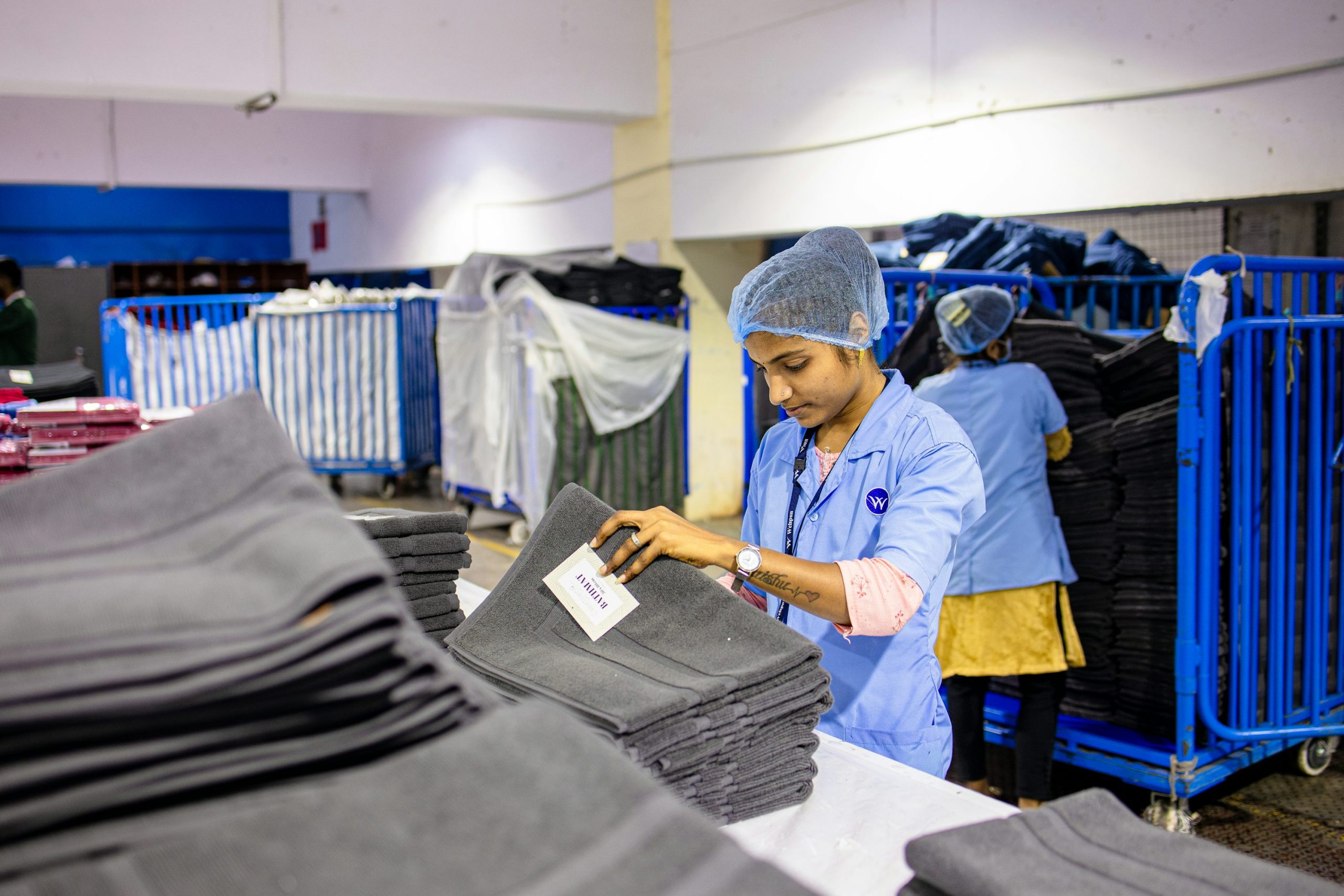
Mumbai, November 23, 2026: Welspun Living has approved a capital expenditure plan of up to ₹3,200 crore through its wholly owned subsidiary, Welspun Home Solutions Limited (WHSL), to expand terry towel manufacturing and add spinning, weaving and research capacity. The company expects the project to be completed by December 31, 2028.
The board approved the plan at its November 21 meeting, according to the company’s regulatory filing. The proposed expansion is intended to increase manufacturing scale and strengthen backward integration, allowing more of the yarn and fabric used in towels to be produced within the group.
What capacity will the project add?
The plan includes approximately 29,000 metric tonnes per year of additional terry towel capacity, around 15,000 metric tonnes of weaving capacity and about 31,000 metric tonnes of yarn capacity across coarse-count, fine-count and open-end segments. It also includes a research and development centre.
Welspun Living’s existing consolidated terry towel capacity is approximately 96,000 metric tonnes annually. The company reported utilisation of about 83% as of September 30, 2026. If completed as planned, the new towel capacity would represent an increase of roughly 30% over that existing level.
How will the ₹3,200 crore be funded?
The funding structure has two main parts:
- Up to ₹800 crore: Welspun Living may invest in WHSL through specified preference shares or optionally convertible debentures, in one or more tranches.
- Up to ₹2,400 crore: WHSL may borrow from banks and financial institutions to fund the capital expenditure.
Welspun Living will provide a corporate guarantee for the subsidiary’s borrowing. A guarantee is a contingent exposure for the parent: it can become a financial obligation if the subsidiary does not meet its repayment commitments. It should not be described as ₹2,400 crore already borrowed or spent.
Approvals and timeline
The board approval covers the capex plan and the proposed financing framework. The subsidiary is expected to seek shareholder approval for the relevant securities and borrowing arrangements on November 27, 2026. The company has set December 31, 2028, as the target for completing the capital expenditure.
The project is therefore a forward-looking expansion plan, not capacity that is already operational. Construction, financing drawdowns, approvals, market demand and execution will determine when the additional production becomes available.
Why backward integration matters
Backward integration means bringing more stages of production in-house rather than relying entirely on external suppliers. In this case, additional spinning and weaving capacity could give the group greater control over yarn and fabric supply, production scheduling and quality. It may also help the business manage input-cost volatility, although the actual effect on margins will depend on utilisation, raw-material prices, financing costs and customer demand.
Welspun’s website describes the company as a home-textiles manufacturer with integrated facilities and manufacturing operations in India and overseas. The new plan expands that manufacturing footprint, but it does not guarantee a particular increase in revenue or profit.
For more company-expansion coverage, read Infoflick’s reports on Style Union parent Nexon Omniverse’s ₹485-crore funding round and Adani Energy Solutions’ Bihar transmission project.
Sources and verification
- Welspun Living board-meeting filing text, November 21, 2026 — capex, funding split and capacity additions as disclosed to BSE and NSE.
- Free Press Journal, November 22, 2026 — project scope, financing and completion target.
- Welspun Living — company profile — business and manufacturing background.