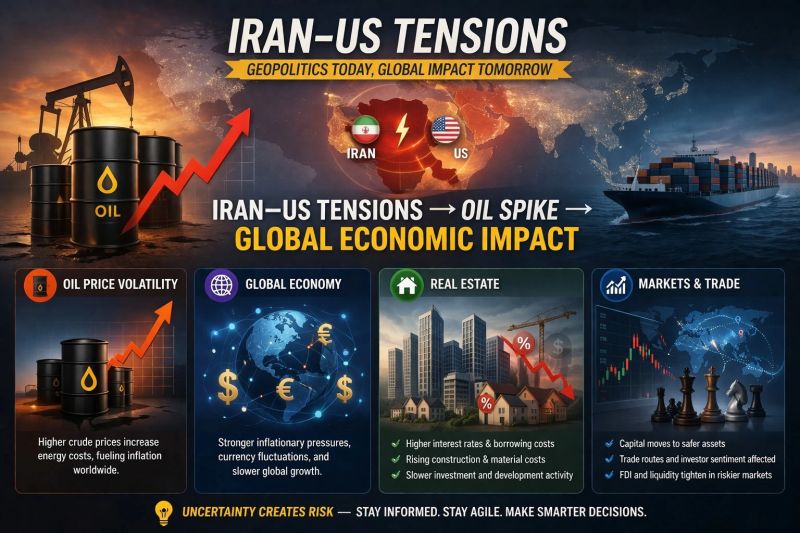
Escalating tensions between the United States and Iran have renewed concerns about global growth, especially because instability around the Strait of Hormuz can affect energy shipments and market confidence. Economists warn that a prolonged conflict and expensive oil could put pressure on households and businesses. Still, recession is not a certainty: the outcome depends on how long disruptions last, the movement in energy prices and how governments and central banks respond.
Why the conflict matters to the economy
The Strait of Hormuz is a major route for global energy shipments. Any disruption can raise the cost of shipping, insurance and crude oil or refined fuel. Higher energy costs can pass through to transport, manufacturing, agriculture and household utility bills. Businesses may then face rising costs while consumers have less money available for discretionary spending.
Recent reporting has highlighted the risk that Middle East conflict and high energy prices could slow growth while keeping inflation elevated. The International Monetary Fund’s October outlook said global growth remains supported by factors including investment in artificial intelligence, but it also identified downside risks such as prolonged conflict, expensive oil, higher bond yields and weather disruptions.
Does this mean the US or global economy is entering a recession?
No definitive conclusion follows from geopolitical risk alone. A recession normally involves a broad and sustained contraction in economic activity, not just a fall in one market or an increase in oil prices. Employment, consumer spending, production, business investment and credit conditions all matter.
Higher energy costs could increase inflation and make it harder for central banks to cut interest rates. If borrowing stays expensive, companies may delay expansion and households may reduce spending. But the impact can differ by country: energy importers are especially vulnerable to price shocks, while energy exporters may receive higher revenues.
What should households and investors watch?
Key indicators include crude oil prices, shipping movements through the Strait of Hormuz, inflation readings, central-bank policy decisions, employment data and business surveys. A sustained shock lasting months would generally be more worrying than a brief spike followed by a recovery in supply.
Investors should be cautious about treating dramatic headlines as reliable forecasts. Markets can quickly reverse when diplomatic talks progress or supply disruptions ease. Diversification and a clear time horizon are more useful than making rushed decisions based on a single news event.
What it means for India
As a major energy importer, India can be affected by higher oil prices through the import bill, currency pressure, transport costs and inflation. The scale of the impact will depend on global prices, supply availability, policy responses and domestic demand.
Bottom line: The conflict raises meaningful downside risks, but recession is a scenario to monitor—not a confirmed outcome. Follow data and official economic forecasts as the situation develops.