
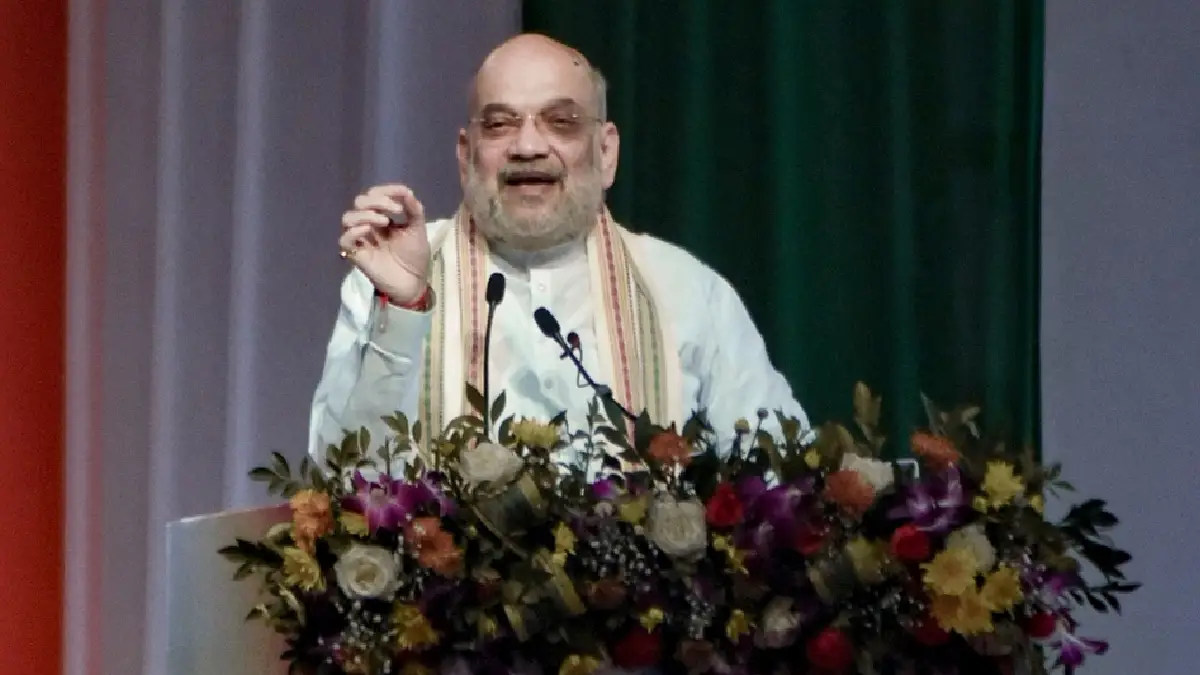
Union Home Minister Amit Shah has called for political differences to be kept aside when it comes to promoting Indian languages, stressing the importance of protecting and strengthening the country’s rich linguistic heritage.
Shah’s remarks come amid continuing discussions about the role of Indian languages in education, administration, technology and public communication. India is home to hundreds of languages and dialects, with several major languages having deep historical and cultural roots.
The Home Minister emphasised that language should be viewed as an important part of India’s cultural identity and that efforts to promote Indian languages should receive support across political and ideological lines.
According to Shah, preserving linguistic diversity is not merely a cultural responsibility but also an important step towards strengthening India’s connection with its history and traditions. He has frequently advocated greater use of Indian languages in education, government services and technology.
Focus on Linguistic Diversity
India’s linguistic landscape includes languages such as Hindi, Kannada, Tamil, Telugu, Malayalam, Marathi, Bengali, Gujarati, Punjabi, Assamese and Odia, among others. Each language has its own literary traditions, cultural practices and historical significance.
The push to promote Indian languages has also gained importance with the rapid expansion of digital platforms. Technology companies, educational institutions and government agencies are increasingly working to make digital services available in multiple Indian languages.
Shah’s appeal for cooperation highlights the need for a broader approach in which the promotion of one language does not necessarily come at the expense of another. Supporters of India’s multilingual heritage have long argued that regional languages need greater representation in education, media, digital products and public services.
Indian Languages and Technology
The growing use of artificial intelligence and digital technology has created new opportunities for Indian languages. Translation tools, voice assistants, digital education platforms and language-processing technologies can help people access information in their preferred languages.
The government has also been promoting initiatives aimed at increasing the availability of digital content and services in Indian languages.
Experts believe that wider adoption of Indian languages in technology could help bridge the digital divide, particularly for people who are more comfortable communicating in their mother tongue.
A Broader Cultural Mission
Shah’s statement places language promotion within the broader objective of preserving India’s cultural heritage. By encouraging cooperation beyond political differences, the focus can remain on creating greater opportunities for Indians to learn, communicate and access services in their own languages.
The debate over language in India has often been politically sensitive. However, the emphasis on protecting linguistic diversity could provide common ground for governments, political parties, educational institutions, technology companies and civil society.
The call to set aside political differences therefore underlines a broader message: India’s linguistic diversity can be treated as a shared cultural asset, with collective efforts needed to ensure that Indian languages continue to flourish in the digital age