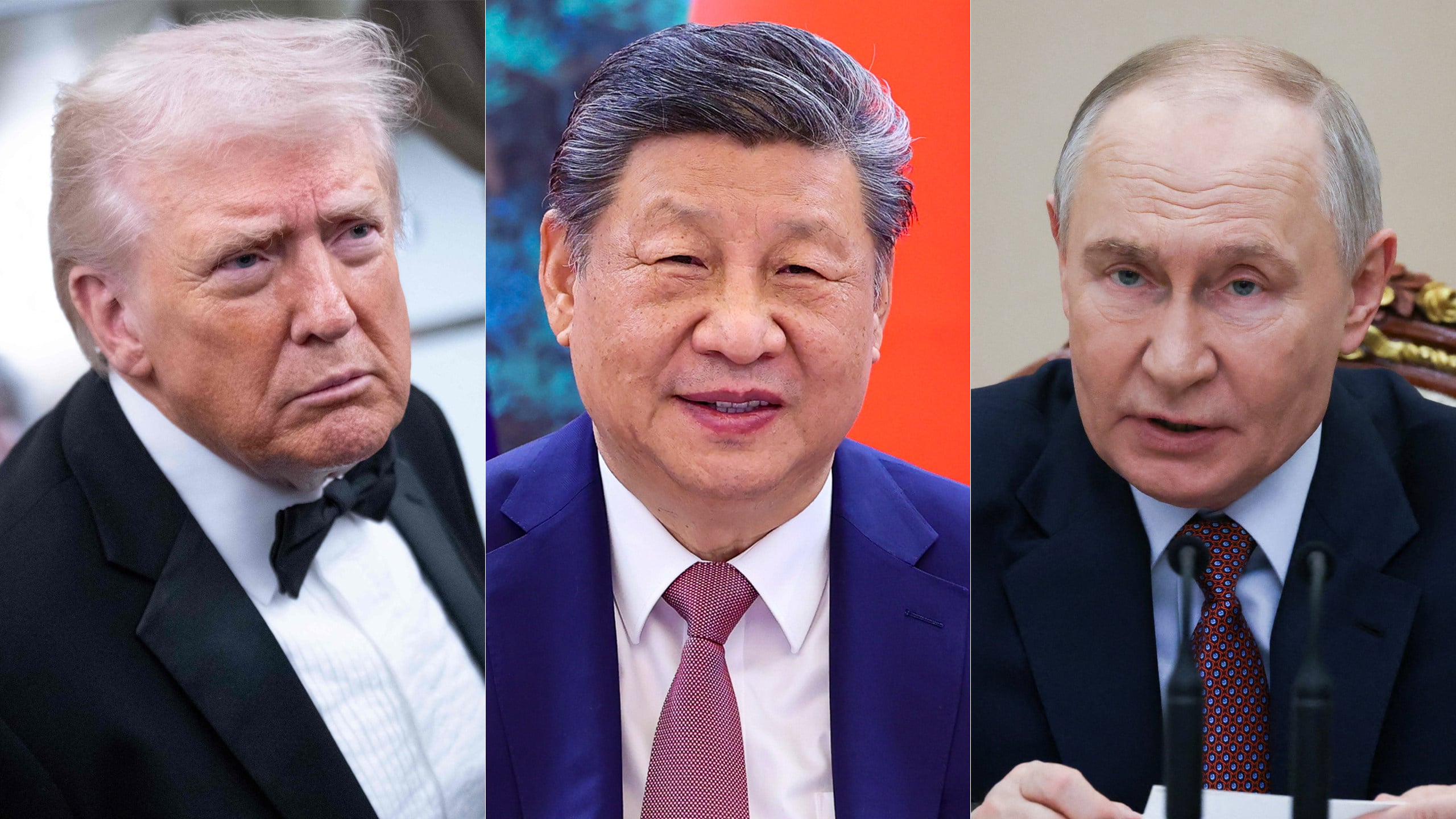
US President Donald Trump has said he is open to meeting Russian President Vladimir Putin and Chinese President Xi Jinping, while separately arguing that Ukraine should consider appointing someone else to negotiate an end to its war with Russia. The comments, reported on October 19 and 20, put diplomacy and the future of negotiations back in focus.
Trump’s openness to a meeting with Putin and Xi is linked in reports to broader discussions about nuclear weapons and denuclearisation. The proposed gathering has been described as a possible trilateral summit, potentially around the time of the Asia-Pacific Economic Cooperation leaders’ meeting in China in November. No final date, venue or confirmed attendance should be treated as settled unless the governments involved formally announce it.
Ukraine negotiations remain uncertain
In separate remarks, Trump said Ukrainian President Volodymyr Zelensky should have somebody else negotiate with Russia. His statement renewed questions about Washington’s approach to the war and the role the United States expects Kyiv to play in any future settlement.
Ukraine’s position has consistently centred on its sovereignty, security and the terms under which a lasting peace could be reached. Russia’s invasion, the status of occupied territory, security guarantees and the prospect of future attacks remain central issues. Any negotiation would also involve difficult questions about enforcement and whether the parties would accept the proposed terms.
Trump’s comments do not, by themselves, indicate that Ukraine has agreed to replace its negotiating team or that a new peace process has been formally established. Diplomatic statements can signal political preferences, but formal negotiations require participation and agreement from the parties involved.
Why a Trump-Putin-Xi meeting would matter
A meeting among the leaders of the United States, Russia and China would carry significance beyond the war in Ukraine. All three countries have major nuclear arsenals, and any discussion of arms control would take place against concerns about strategic stability and the future of international agreements. Analysts would watch for whether the leaders could agree on a process, rather than simply exchange broad statements.
China has maintained diplomatic and economic ties with Russia while also presenting itself as a potential voice for political dialogue. The United States has its own strategic competition with China, making a three-way meeting complex even if the leaders agree on a narrow agenda.
What to watch next
The next indicators will be official confirmation of a summit, the stated agenda, and any response from Kyiv and European governments. It will also be important to distinguish a proposed meeting from an agreement that produces concrete steps toward peace or arms control.
For now, Trump’s remarks suggest an openness to high-level diplomacy, but the prospects for a breakthrough remain uncertain. The details of any future talks—and whether Ukraine is directly represented—will determine their practical importance.