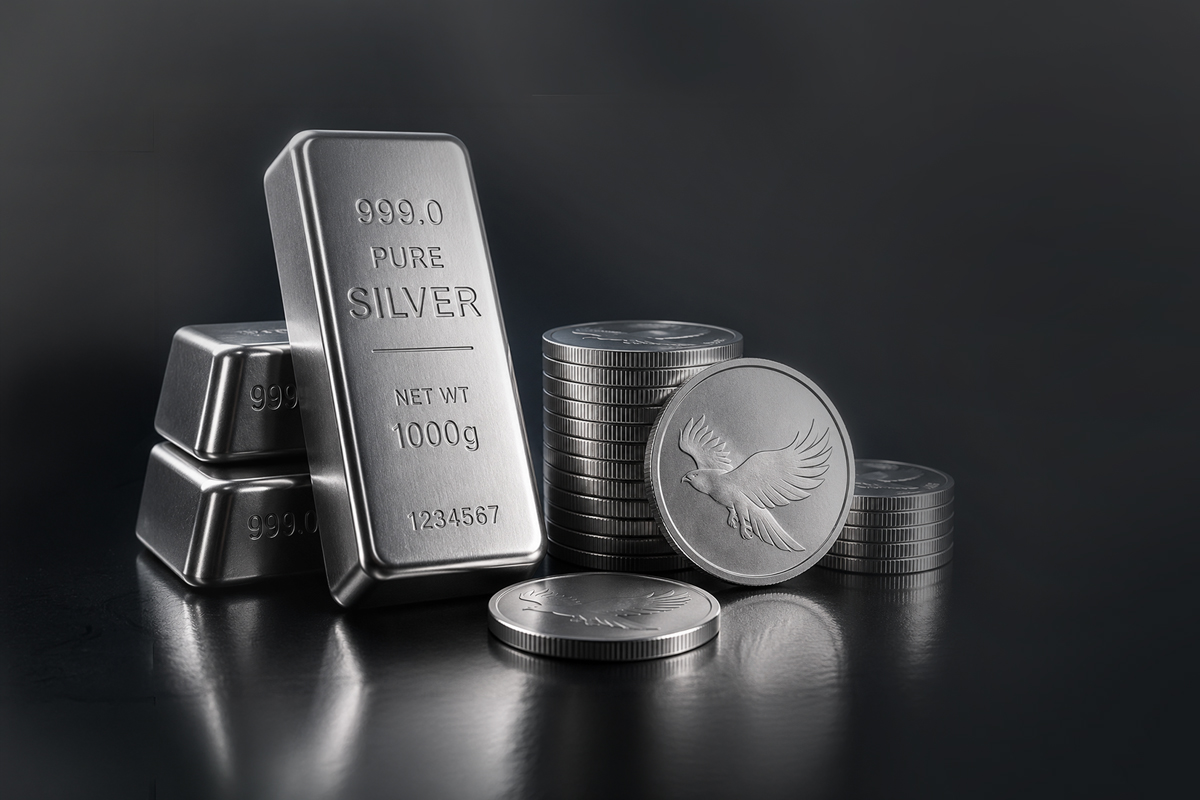
Silver could remain volatile in 2027 after a sharp correction, with the possibility of further declines as well as a recovery if gold strengthens and investment demand returns. Unlike gold, silver is both a precious metal and an industrial input, so its price responds to interest rates, investor sentiment and manufacturing demand.
Why has silver fallen so sharply?
Silver has been hit by the same macroeconomic pressures affecting gold: a stronger US dollar, higher bond yields and expectations of tighter US monetary policy. Recent market reports showed silver suffering a double-digit weekly decline, with futures and spot prices reaching their lowest levels in more than a year.
Silver is generally more volatile than gold because its market is smaller and industrial demand plays a larger role. When investors unwind crowded positions, price moves can be amplified.
Could silver fall further in 2027?
Yes. Further declines are possible if the US dollar stays strong, real yields remain high, global manufacturing slows or investor demand weakens. The solar industry is also using less silver per unit in some applications and exploring substitution, which could restrain demand growth.
Recent analysis cited by the Economic Times has highlighted the possibility that the silver market could move from a deficit towards a surplus in 2027 as supply improves and some areas of demand soften. That is a risk to prices, although the scale and timing remain uncertain.
Why could silver recover?
The Silver Institute’s November 2026 update projected a sixth consecutive annual global market deficit for 2026, with demand expected to exceed supply by about 35 million ounces. It also expects industrial demand excluding photovoltaics to grow by 4.5% in 2026. Mine supply is forecast to remain broadly flat, while recycling is expected to increase.
Silver could also benefit if gold recovers, bond yields decline, the dollar weakens and investors return to precious-metal funds. Automotive electrification, electronics and other industrial uses may provide support over time.
What are analysts saying about 2027?
Forecasts differ. WisdomTree’s October 2026 outlook projected silver moving towards US$70 an ounce by the third quarter of 2027, mainly on the assumption that gold recovers and bond yields and the dollar ease. The same analysis warned that weaker industrial demand could limit silver’s upside. Other analysts have been more cautious, highlighting higher supply and the risk of softer demand.
These are scenarios, not guaranteed prices. The latest market correction also means older forecasts should be treated carefully.
What does this mean for Indian silver buyers?
Indian silver prices are affected by international prices, the rupee-dollar exchange rate, import costs, taxes and local premiums. A fall in the global price may not translate fully into a lower Indian retail price if currency or domestic costs move in the opposite direction.
Buyers should compare the total price, purity, making charges and resale terms. Investors should remember that silver can experience larger short-term swings than gold and should avoid using borrowed money to speculate.
Silver in 2027: the key factors to watch
- US Federal Reserve policy, bond yields and the dollar.
- Global manufacturing activity, especially in China.
- Solar-panel silver intensity and substitution trends.
- Mine output, recycling and above-ground inventories.
- Gold’s direction and investment demand for precious metals.
Final outlook
Silver may face further downside if rates and the dollar stay high or industrial demand disappoints. A recovery remains possible if gold strengthens and investment flows return. The balance between supply, industrial use and investor demand—not a single price prediction—will determine the direction in 2027.
Forecasts are not guarantees. This article is for general information and is not investment advice.