November 27, 2026: Paddy straw that was once routinely burned after harvest is becoming a source of fuel and rural work in parts of Punjab. Farmers, baling operators and transporters are feeding a growing supply chain that moves crop residue to biomass power plants instead of leaving it in fields.
The shift is visible in Faridkot district, where Reuters reported on November 26 that farmers were selling straw to processors supplying an 18-megawatt biomass plant operated by SAEL Industries. The model offers an alternative to open-field burning, but analysts say the industry is not yet large enough to make a clear difference to Delhi’s winter air.
How paddy straw is becoming a marketable crop residue
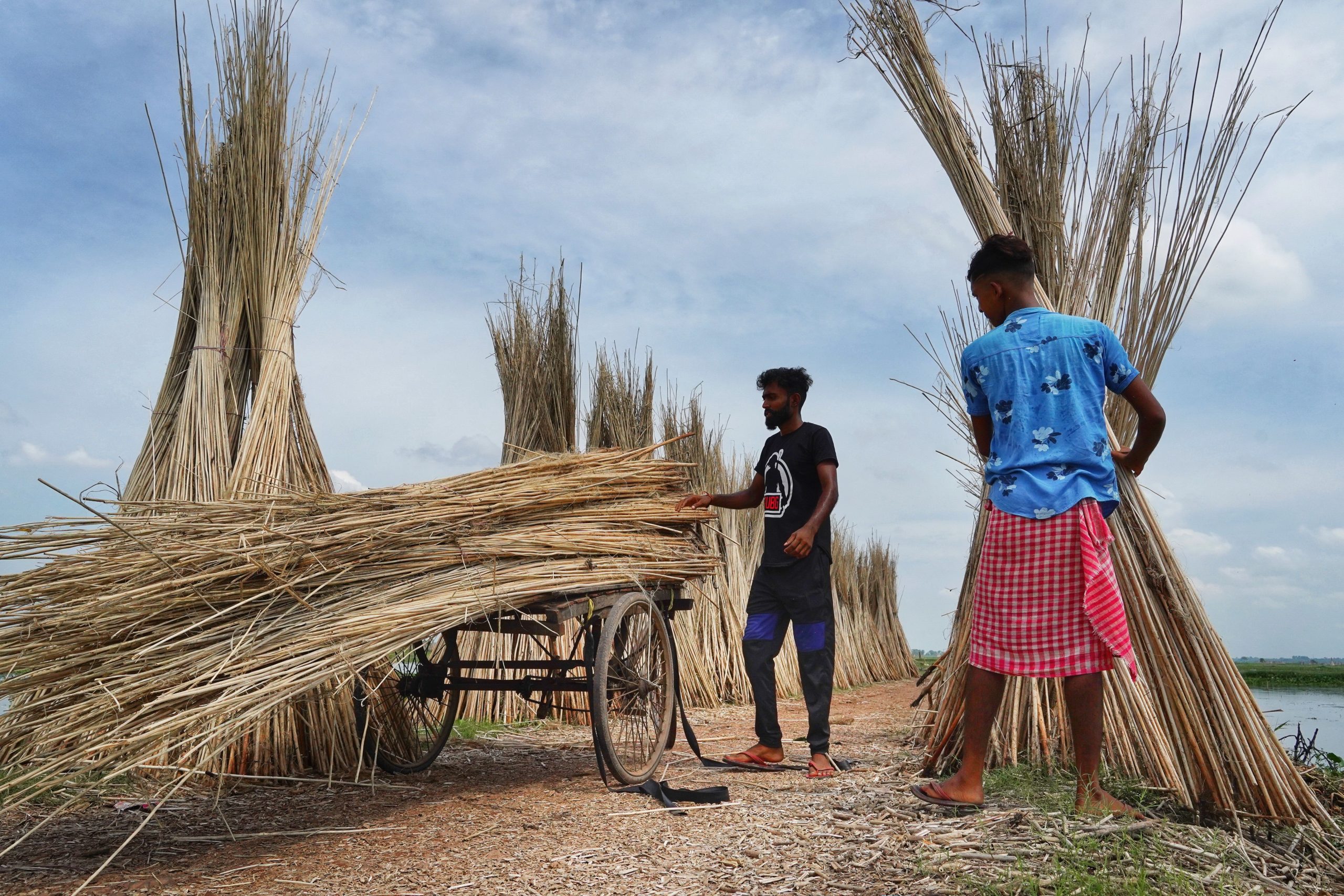
After paddy is harvested, specialised machines collect and compress the leftover stalks into bundles. Local aggregators and transport operators move the material to processors or energy plants, where it can be used as fuel. The chain creates work beyond the farm, including for machinery owners, drivers and labourers.
Reuters described one Faridkot-area processor whose operation cost about ₹4.5 crore to establish and whose reported annual turnover is ₹7–8 crore. The operator said the business provides work for as many as 70 families. These are figures from one business, not an industry-wide average.
What the latest official farm-fire figures show
The latest fully published season-wide figures in the official CAQM document reviewed for this report show 5,114 farm-fire counts in Punjab during the 2025 paddy-harvesting season. That was 53% lower than 2024 and 86% lower than 2023. The CAQM also recorded 662 incidents in Haryana in 2025. A final comparable total for the 2026 season was not available in the official document reviewed.
The regulator attributed the decline to a combination of state and district action plans, wider use of crop-residue machinery, enforcement and greater use of straw outside the field. Its list of alternatives includes biomass-based power, industrial boilers, bio-ethanol, pellets and briquettes. The data does not show that biomass plants alone caused the reduction.
How much straw is entering the energy supply chain?
In a November 2 company announcement, SAEL Industries said it had begun procuring about 20 lakh tonnes of paddy straw in phases to supply 11 agricultural-waste-to-energy plants with a combined capacity of 164.9 MW. This is the company’s stated procurement plan; it should not be read as an independently audited total already collected.
The company also highlighted the short gap between paddy harvesting and the next wheat-sowing cycle. With only around 15–18 days available in many areas, reliable machinery, collection teams, transport and a buyer for the residue can determine whether farmers have a practical alternative to burning.
Why the biomass model is not a quick fix for Delhi pollution
Biomass projects remain small compared with the wider agricultural-residue stream. Reuters quoted an iFOREST expert who said the sector needs to expand before its impact becomes visible in Delhi’s air. The report also noted that Delhi’s pollution has several sources, so fewer farm fires do not automatically translate into clean city air.
Weather and atmospheric conditions matter too. In its review of the 2025 season, CAQM said meteorological factors influence the Delhi-NCR air-quality picture, even as lower farm-fire counts reduce the potential for pollution spikes linked to stubble burning.
What could help farmers choose collection over burning?
Analysts cited by Reuters have called for more predictable procurement arrangements and a clearer price signal for paddy straw. The practical requirements are straightforward: access to balers and other machinery, dependable collection within the short post-harvest window, storage capacity, transport and contracts that give farmers confidence that the straw will actually be purchased.
For farmers, the value of the model depends on whether the payment and convenience outweigh the cost and effort of clearing the field. For energy companies, the challenge is securing a steady supply of dry, usable feedstock close enough to plants to keep transport costs manageable.
The emerging straw market is therefore best understood as one part of a wider crop-residue strategy, not a single solution to stubble burning. Its long-term effect will depend on whether collection networks and energy demand can grow beyond a handful of local projects.
For more coverage, browse Infoflick’s latest news and business coverage.
Sources and further reading
- Reuters, November 26, 2026: Indian farmers sell paddy stubble to biomass firms, reduce burning
- CAQM press release, December 1, 2025: Paddy harvesting season and farm-fire counts in Punjab and Haryana
- SAEL Industries, November 2, 2026: Paddy-straw procurement plan for 11 agri-waste-to-energy plants
- Photograph by Dibakar Roy via Pexels — Pexels licence
Image note: The featured photograph is an illustrative image of farmers handling bundled crop residue. It is not a photograph of the Faridkot project or a specific Punjab biomass plant.
Related Infoflick coverage
For the public-health side of poor air days, read Infoflick’s guide to protecting lung health when air quality is poor. For another development in India’s renewable-energy market, see our report on ACME Solar’s 50 MW Gujarat auction win.