
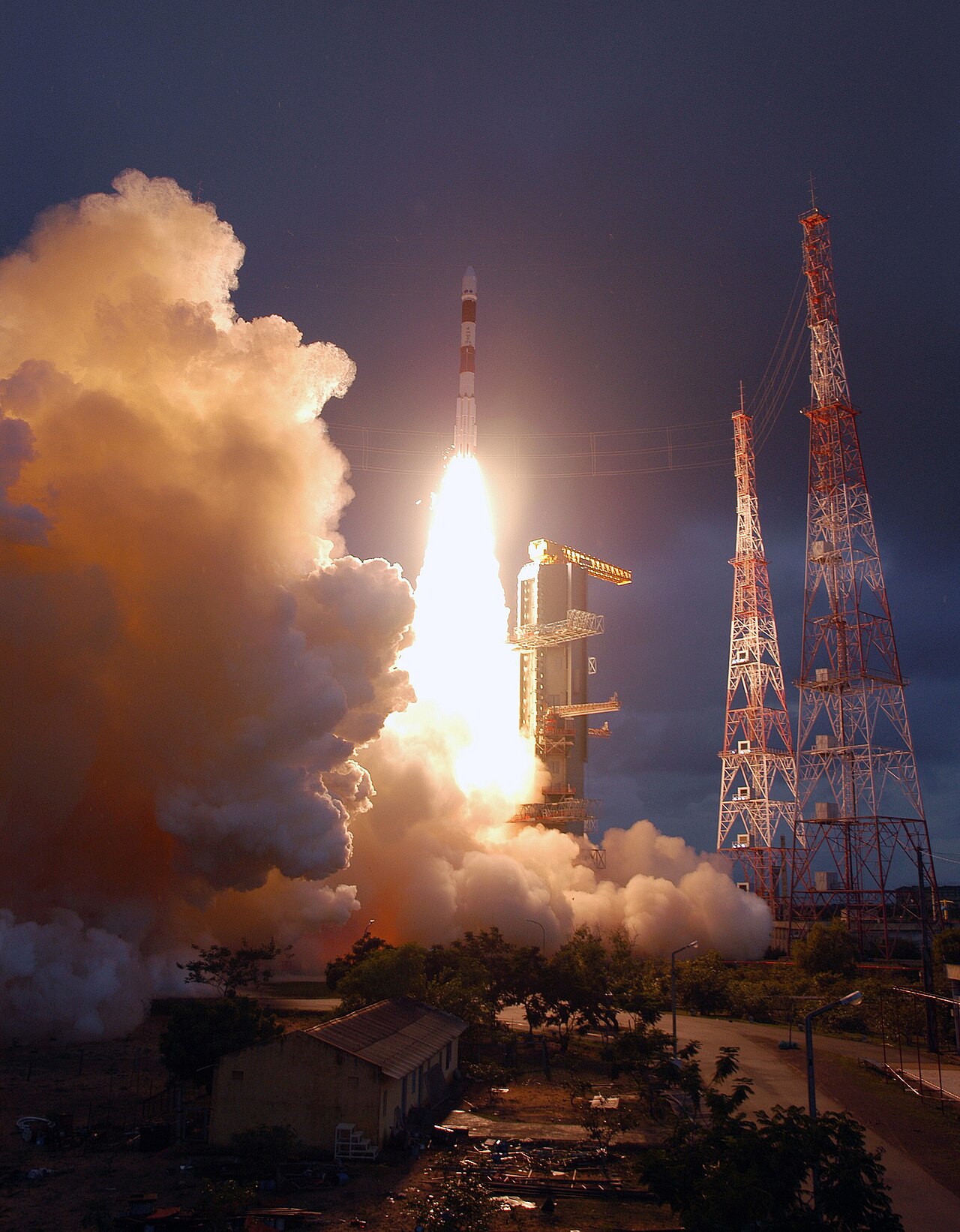
India’s first Polar Satellite Launch Vehicle built end-to-end by an industry consortium is now targeted for launch in the first quarter of 2027, ISRO Chairman V. Narayanan said on November 24, 2026. The vehicle, PSLV-N1, is being realised by a consortium led by Hindustan Aeronautics Limited (HAL) and Larsen & Toubro (L&T).
The target is an important milestone in India’s effort to move routine launch-vehicle production into the domestic industrial ecosystem while allowing ISRO to concentrate more resources on advanced missions and research.
ISRO chief confirms the first-quarter 2027 target
Speaking at the fifth India International Space Conference in New Delhi, Narayanan said the HAL-L&T consortium had been assigned five PSLV missions and that the first rocket was getting ready. He set the first launch target for January to March 2027.
The statement gives a clearer public target for PSLV-N1, but it is not a fixed launch date. A launch window will depend on readiness reviews, payload coordination, range availability and the agency’s final mission clearance.
Why PSLV-N1 is significant
PSLV-N1 is the first vehicle in the five-rocket production order placed by NewSpace India Limited (NSIL), ISRO’s commercial arm, with the HAL-L&T consortium. ISRO’s own productionisation update from October 2023 recorded the delivery of propellant ingredients for the solid motors of the inaugural industry-manufactured PSLV-N1.
The programme represents a shift from companies supplying parts and subsystems to industry taking responsibility for end-to-end production of operational launch vehicles. ISRO will continue to handle mission analysis, planning and configuration control, while the industrial partners build the vehicles under the production arrangement.
What satellite will the rocket carry?
The maiden PSLV-N1 mission is expected to carry EOS-10, an Earth-observation satellite, according to reporting by The Indian Express. The mission will be watched closely because it will test the first industry-built PSLV in flight, not just its manufacturing process on the ground.
Why the schedule moved
The original production timeline envisaged the first vehicle earlier. L&T executive A. T. Ramchandani told The Indian Express that coordination with the payload and the available launch window had contributed to the delay. The report also noted that ISRO is taking a cautious approach after two consecutive PSLV mission setbacks involving third-stage anomalies.
ISRO’s launch records list PSLV-C61 in May 2025 as not accomplished, while the January 2026 PSLV-C62 mission also encountered an anomaly, according to the agency’s public mission updates and Reuters reporting. These events form part of the context for the careful review of upcoming PSLV flights.
What happens next
The next steps are completion of vehicle and payload integration, technical reviews, range preparations and formal confirmation of the launch window. Until ISRO or NSIL publishes a mission schedule, the first quarter of 2027 should be treated as the current target rather than a guaranteed date.
Sources and official background
- ISRO: Productionisation of PSLVs and the PSLV-N1 order
- The Times of India: ISRO chief sets Q1 2027 target
- The Indian Express: PSLV-N1 schedule and reported reasons for delay
- India Today: Five PSLV missions assigned to the HAL-L&T consortium
- ISRO: Official launch mission records
Also read: IASST Guwahati’s nanowire-MOF research and TRAI’s draft AI guidelines for telecom networks.
Comments