
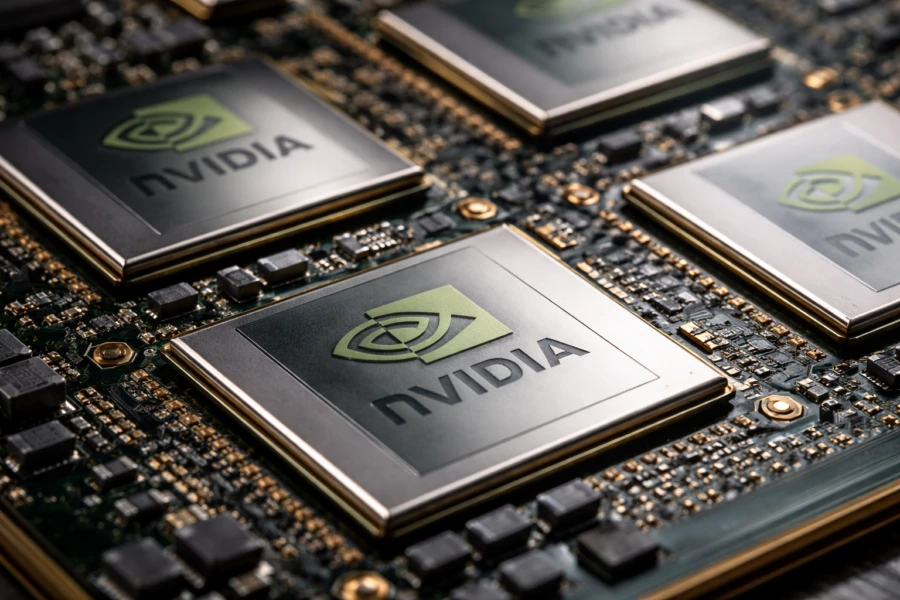
Nvidia has stopped shipping US-licensed Hopper data-centre chips to China, adding another complication to the global AI hardware supply chain. The development was reported by Reuters on November 18, after Nvidia interim chief executive and finance chief Colette Kress said the company had no further shipments of the licensed products in its current outlook.
The company had previously sold $2.4 billion worth of licensed Hopper products, including H200 processors, in the quarter ended October 25. Nvidia did not explain the reason for the latest halt or say whether it would be permanent, according to Reuters.
Why the chip shipments matter
Advanced processors are a critical component of AI infrastructure. They are used to train large models and run the computing workloads behind generative AI products, cloud services and enterprise applications. Access to high-performance chips can influence how quickly technology companies expand their AI services.
US export controls on advanced semiconductors have changed several times since 2022. Although Washington had approved some sales of H200 chips under licensing conditions, the latest developments show how quickly the rules and commercial outlook can shift.
Chinese technology companies face uncertainty
Reuters reported that US approvals had covered shipments to 10 Chinese companies, including Alibaba, Tencent and ByteDance. However, Beijing has also restricted imports as it seeks to reduce dependence on US technology and strengthen domestic semiconductor capabilities.
The report said around 600,000 H200 chips were being held in Hong Kong pending Chinese approval for large-scale imports. Uncertainty over access to these processors could affect procurement plans and the timing of some AI infrastructure projects.
Could the restrictions accelerate domestic chip development?
Restrictions on imported processors may encourage Chinese technology companies to invest further in domestic chip design, software optimisation and alternative supply chains. However, developing competitive high-performance processors and the surrounding manufacturing ecosystem is a complex, long-term task.
Companies may also explore more efficient AI models, workload scheduling and a mix of available hardware to manage computing demand. The practical impact will depend on the availability, performance and cost of alternative systems.
What to watch next
Technology companies and investors will monitor further US licensing decisions, China’s import policy and Nvidia’s future guidance on shipments. The issue is part of a wider competition over semiconductors, AI infrastructure and access to advanced computing.
Technology takeaway: Nvidia’s shipment halt highlights how export policy can affect the AI hardware market. For companies building AI services, access to chips and supply-chain flexibility remain crucial planning factors.
Source: Reuters, November 18, 2026.




Comments