
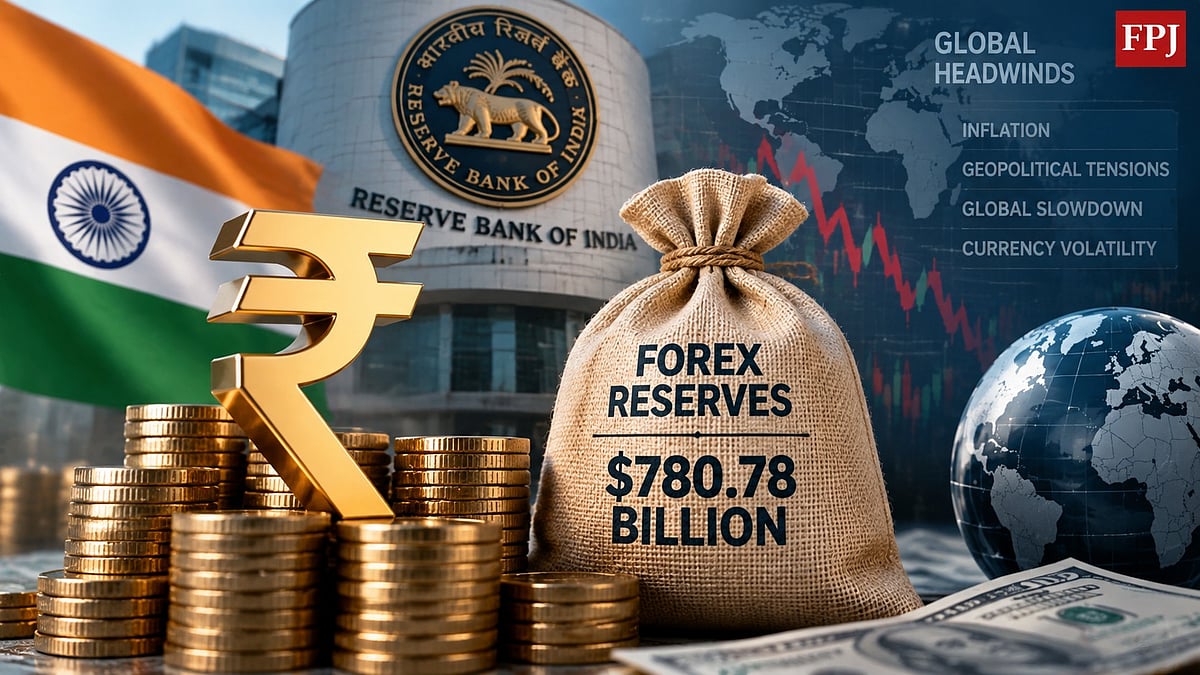
India’s foreign exchange reserves declined by $14.21 billion to $705.34 billion in the week ended November 13, 2026, according to the Reserve Bank of India’s weekly statistical supplement released on November 20. The fall follows reserves of $719.55 billion in the previous reporting week.
The latest figures put the country’s reserve stockpile at its lowest level in around three months. The RBI data shows that the decline was spread across the main components of the reserves, particularly foreign currency assets and gold.
Which components recorded the biggest decline?
Foreign currency assets, the largest part of India’s forex reserves, fell by about $7.90 billion to $583.45 billion. Gold reserves declined by approximately $6.18 billion to $98.61 billion. Special Drawing Rights fell by around $92 million to $18.52 billion, while India’s reserve position with the International Monetary Fund slipped by about $32 million to $4.76 billion.
The RBI’s official weekly statistical supplement records total reserves at $705.342 billion as of November 13.
Why did India’s forex reserves fall?
Foreign currency assets are reported in US dollar terms, so changes in the value of currencies such as the euro, pound and yen can affect the reported total. Reserve levels can also move when the central bank intervenes in the foreign exchange market or when currency swap transactions mature.
Business Standard reported that the fall included a decline in foreign currency assets and gold holdings, and cited an estimate of dollar sales alongside valuation effects. These movements should be read in context rather than treated as a standalone measure of the country’s economic strength.
Does the decline affect the Indian rupee?
Foreign exchange reserves provide the RBI with a buffer to manage external shocks and support orderly conditions in the currency market. A weekly decline does not automatically mean that the rupee will weaken or that India faces a balance-of-payments crisis. Currency movements depend on several factors, including capital flows, trade, oil prices, global interest rates and central-bank actions.
What to watch next
Investors and businesses will watch the RBI’s next weekly reserve release, movements in the rupee, global bond yields and changes in foreign currency assets. The composition of reserves is as important as the headline total.
Key takeaway: India’s forex reserves stood at $705.34 billion on November 13, down $14.21 billion from a week earlier. The RBI’s detailed breakdown helps explain where the decline came from.
Sources: Reserve Bank of India and Business Standard. Figures are for the week ended November 13, 2026.


Comments