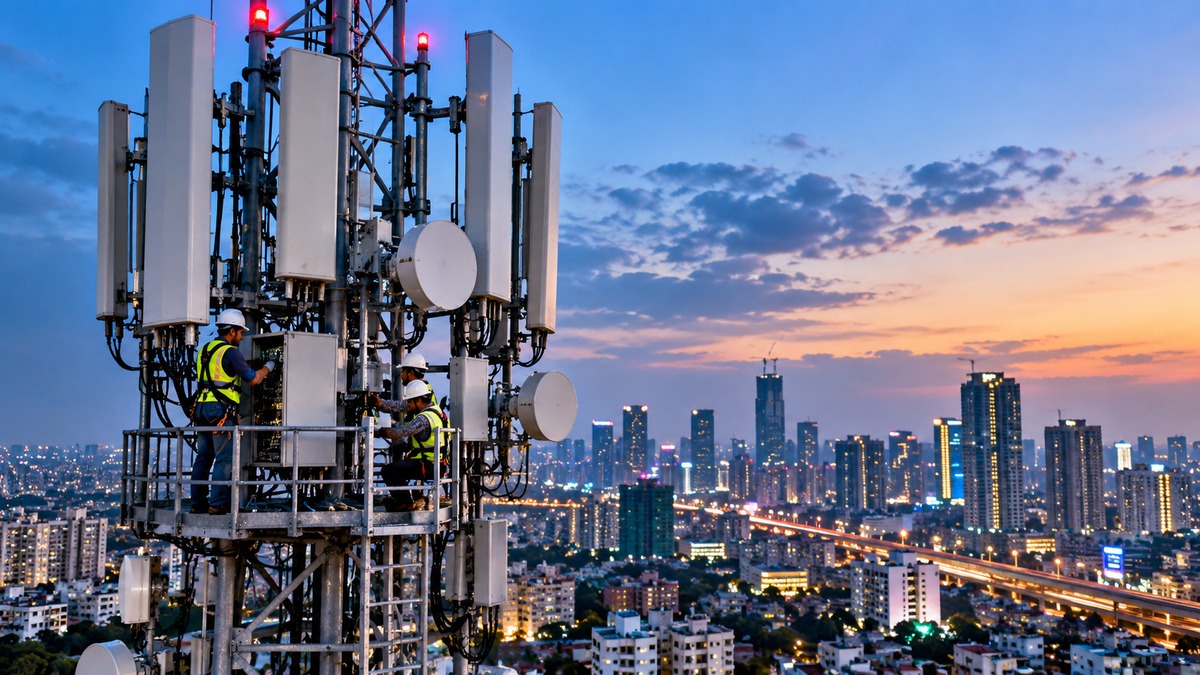
State-run telecom operator Bharat Sanchar Nigam Limited (BSNL) is stepping up its network modernisation effort as it attempts to narrow the gap with private competitors Reliance Jio and Bharti Airtel. The company’s expansion combines a large indigenous 4G rollout, plans for additional network investment and preparations for 5G services. The key question for consumers is whether the programme can translate into consistently better coverage, faster data and reliable customer support.
BSNL’s 4G rollout gathers pace
The Department of Telecommunications said in a March 2026 update that BSNL had installed 97,906 indigenous 4G sites as of February 28, with 96,103 sites on air. The original nationwide programme covers one lakh 4G sites and uses technology developed in India. The equipment is designed to be upgradeable to 5G from a technology perspective.
The rollout is important because BSNL has historically lagged behind private operators in 4G availability. A stronger 4G footprint can improve service in towns, villages, highways and remote areas where customers have limited alternatives. It can also help the company retain subscribers who moved to private networks for mobile broadband.
Proposed investment and expansion plans
In August 2026, reports based on Department of Telecommunications information said BSNL had proposed a capital expenditure programme of around Rs 77,000 crore over five years. The plan includes up to two lakh additional 4G sites, network strengthening and 5G rollout in high-traffic and strategic locations. The proposal is also linked to a longer-term ambition of improving nationwide coverage and moving towards operational breakeven by financial year 2028-29.
These figures describe a proposed investment plan and should not be mistaken for towers already installed. A large capital programme requires funding, procurement, site acquisition, backhaul, power availability and timely commissioning. Actual rollout schedules may vary by telecom circle and local requirements.
Can BSNL challenge Jio and Airtel?
Jio and Airtel have established large 4G and 5G networks, strong distribution systems and extensive digital service ecosystems. Their competitive advantage includes network capacity in high-demand urban areas, bundled services, customer support and established 5G coverage. BSNL will need to compete on more than price if it wants to win back customers.
BSNL could have an opportunity in areas where customers value affordable plans, wider rural reach and dependable voice connectivity. Its indigenous technology programme may also support long-term control over network costs and local telecom manufacturing. However, low tariffs alone cannot compensate for weak indoor coverage, congestion or inconsistent data speeds.
What customers should look for
Consumers considering a switch should check coverage at home, work and along regular travel routes rather than relying only on national rollout numbers. They should also compare data speeds at peak hours, call quality, recharge benefits, 4G device compatibility and customer service availability.
For BSNL, the next milestones will be the completion and stabilisation of its 4G network, transparent progress on the proposed expansion, and a commercially meaningful 5G launch. The company has a clear opportunity, but the real test will be everyday network performance. If execution matches its ambitions, BSNL could become a more credible challenger in India’s telecom market. For now, Jio and Airtel retain a substantial head start.
Sources: Department of Telecommunications/PIB, Moneycontrol and TelecomTalk.
Execution will matter more than headline numbers
Telecom network expansion is a complex engineering exercise. A tower being installed does not automatically mean that customers receive a strong signal: the site also needs reliable power, fibre or microwave backhaul, spectrum planning and integration with neighbouring cells. In crowded cities, operators must add capacity where demand is concentrated. In rural and hilly regions, terrain and distance can make coverage more difficult. BSNL’s progress will therefore need to be judged by active sites, service quality and user experience rather than the total number of planned installations alone.
Pricing will remain an important part of the competition, but customers increasingly expect uninterrupted video streaming, stable online payments, clear voice calls and quick resolution of complaints. Independent network tests and transparent coverage information can help subscribers make informed decisions. If BSNL improves these everyday measures while expanding 4G and preparing 5G, it could strengthen its position. If execution is delayed or service remains inconsistent, private operators are likely to retain their advantage.