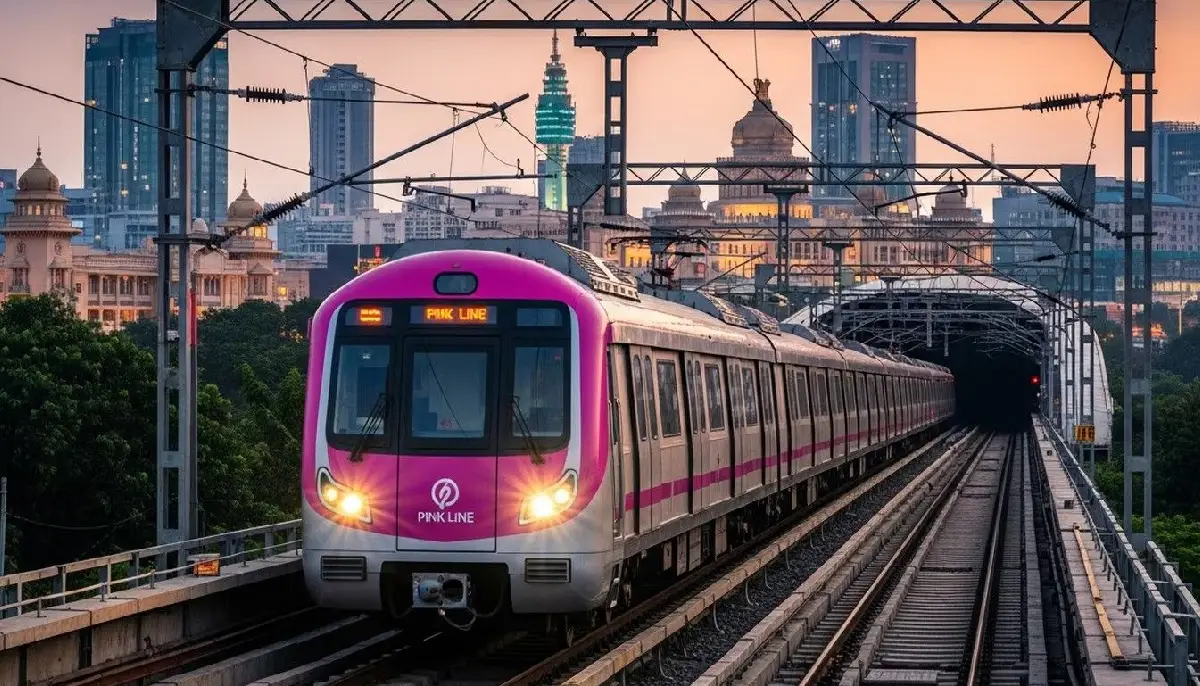
Bengaluru’s rising commuting costs have sparked fresh debate over the affordability of public transportation in the city, with a recent calculation suggesting that a regular Namma Metro commute could require a monthly salary of around ₹70,400 to remain financially manageable.
The calculation considers a typical 15-km one-way journey on Namma Metro, combined with approximately 2 km of last-mile travel in each direction. For an employee commuting 22 working days a month, the combined travel expense reportedly comes to around ₹3,520 per month.
While ₹3,520 may appear manageable in isolation, the figure becomes more significant when considered alongside Bengaluru’s high cost of living. Rent, groceries, food, utilities and other everyday expenses can consume a substantial portion of a worker’s monthly income, particularly for people living closer to employment hubs.
The discussion has also highlighted how public transport costs compare with salaries in different Indian metropolitan cities. Bengaluru commuters have pointed to the growing gap between transportation expenses and income, particularly after metro fare revisions.
Namma Metro has become an essential part of Bengaluru’s public transport network, helping thousands of commuters travel between residential areas and major employment centres. However, as fares and other commuting expenses increase, affordability has become an important concern for regular passengers.
Social media discussions around the calculation have reflected mixed reactions. Some commuters expressed frustration over the rising cost of travelling to work, while others questioned whether a monthly income of ₹70,000 or more is actually sufficient for a comfortable life in Bengaluru.
One humorous reaction compared the cost of a regular metro journey to travelling in a private aircraft, reflecting the frustration some commuters feel about increasing transportation expenses.
However, the ₹70,400 figure should be understood as an estimate based on a specific commuting pattern and assumptions about affordability, rather than a formal income requirement imposed by Namma Metro. Actual monthly expenses can vary significantly depending on distance travelled, number of office days, last-mile transportation, housing costs and individual spending habits.
For many Bengaluru residents, the debate goes beyond metro fares. It raises broader questions about the relationship between salaries and the cost of living in one of India’s major technology and employment hubs.
As Bengaluru continues to expand and more workers rely on public transportation for daily commuting, the affordability of metro travel is likely to remain an important issue. For commuters, the challenge is not simply reaching the workplace but doing so at a cost that remains sustainable alongside rent, food and other essential expenses.