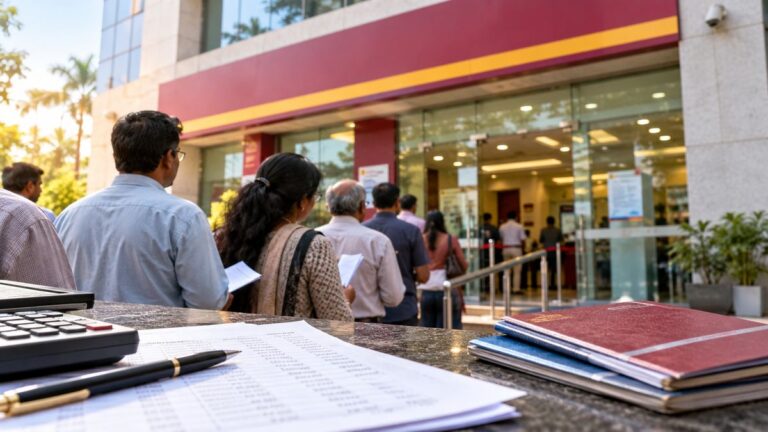
As November 2026 approaches, bank customers should review the terms that apply to their own accounts rather than assume every bank is introducing a new rule on November 1. RBI directions, NPCI circulars and individual bank schedules can change at different times. A responsible update should identify the issuing authority, announcement date, effective date and customers affected.
Check your bank’s official announcements
Start with your bank’s website, mobile app, email or SMS notices. Look for updates about savings-account charges, minimum-balance conditions, ATM transaction limits, cheque services, debit cards, fixed deposits and digital banking. Charges and free-service allowances may differ by bank, account type, customer category and location. Do not rely on a social-media graphic that says a rule applies to every account holder.
Review KYC and account status
Check whether your bank has asked you to update your Know Your Customer details. Follow the bank’s official process and never send identity documents or one-time passwords to an unknown caller. If an account has not been used for a long period, contact the bank to understand its status and reactivation procedure. RBI guidance covers KYC, inoperative accounts and unclaimed deposits, but individual steps depend on the account and applicable direction.
Understand ATM and digital payment terms
Review your bank’s ATM free-transaction allowance and charges for transactions beyond that allowance. For UPI, use only your trusted payment application and remember that entering a UPI PIN generally authorises a payment; it is not needed merely to receive money. If a transaction looks unfamiliar, contact your bank immediately through an official channel and report suspected cybercrime promptly.
Where to verify new rules
Use the Reserve Bank of India website at https://www.rbi.org.in/ for circulars and directions. Check NPCI’s UPI circulars at https://www.npci.org.in/circulars/upi for payment-system updates. Your bank’s own schedule of charges is essential for bank-specific fees.
Bottom line: This is a November checklist, not a claim that every item changes on November 1. Before acting on a reported new rule, confirm its exact wording, scope and effective date from an official source. This article is general information and is not a substitute for your bank’s terms or formal regulatory directions.
Quick checklist for customers
Before the month begins, check that your registered mobile number and email address are current, transaction alerts are enabled, and you can access your bank’s official app. Review recent statements for unfamiliar debits and keep your account documents in a secure place. If a bank notice mentions a deadline, verify it independently rather than clicking a link in an unexpected message. Customers with multiple accounts should review each bank separately because a service charge or process at one bank may not apply at another. For a major financial decision, seek clarification from the bank in writing and retain the response.
Keep a personal banking checklist
Set aside a few minutes to review alerts, balances and pending payments. If a notice refers to a regulatory change, look for a circular number or official announcement rather than relying on a forwarded message. Save the notice and note when it takes effect. Customers should not close an account, withdraw funds or pay a fee solely because a viral post says a new rule is coming. When information is unclear, ask the bank to explain the exact provision in writing. Clear documentation is useful if a charge or service decision later needs to be challenged.