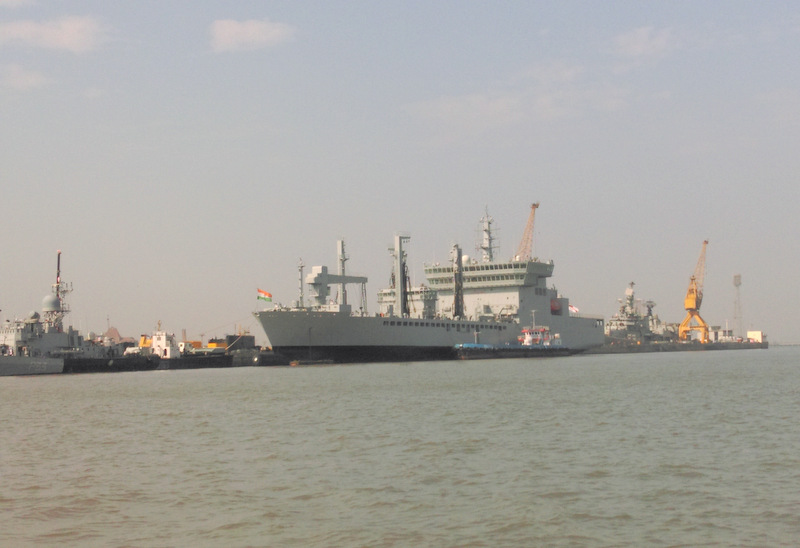
The Indian Navy received Ashank, an indigenously designed Anti-Submarine Warfare Shallow Water Craft (ASW-SWC), at Visakhapatnam on November 23, 2026. The vessel, identified as Yard 3036, was designed and built by Garden Reach Shipbuilders and Engineers (GRSE), Kolkata, according to the Ministry of Defence announcement.
The handover adds another purpose-built platform to the Navy’s coastal anti-submarine capability. The Ministry said Ashank has more than 80 per cent indigenous content and was constructed in accordance with the classification rules of the Indian Register of Shipping.
What is Ashank and what will it do?
An ASW shallow-water craft is designed for operations in coastal and near-shore waters, where submarines can be difficult to detect and track. These waters are often crowded with commercial shipping, fishing activity and complex seabed conditions. A smaller, purpose-built platform can support surveillance and anti-submarine operations in areas where larger warships may be less suited to manoeuvring.
The Ministry of Defence said Ashank is equipped with lightweight torpedoes, indigenous rocket launchers and advanced sonar systems. The craft is also intended to strengthen underwater surveillance, coastal surveillance and mine-laying capabilities.
Why shallow-water anti-submarine capability matters
India’s long coastline and busy maritime approaches make the ability to monitor underwater activity an important part of coastal security. Anti-submarine warfare involves more than carrying weapons: crews must detect, classify and track underwater contacts before a response can be considered. Sonar systems and trained operators are therefore central to the craft’s role.
Waterjet propulsion is another feature of the ASW-SWC programme. The Ministry describes these vessels as among the largest Indian naval warships propelled by waterjets. The propulsion arrangement is suited to the shallow-water operating profile of the class.
GRSE and India’s indigenous shipbuilding effort
GRSE is a defence public-sector shipyard based in Kolkata. Ashank’s delivery reflects the continuing effort to build naval platforms and integrate more domestic systems within India. The reported indigenous-content figure is above 80 per cent; it should not be read as meaning every component, sensor or weapon is locally manufactured.
The Navy’s coastal security capability depends on the combined performance of ships, aircraft, shore-based sensors, communications and trained personnel. A new vessel contributes to that network, but its operational value will be demonstrated through trials, crew readiness and deployment.
Delivery is not the same as commissioning
Ashank was delivered to the Navy on November 23. The Ministry’s release did not announce a commissioning date. Delivery marks the shipyard’s handover of the vessel; commissioning is the later formal ceremony that inducts a ship into naval service. Until the Navy announces that step, it is more accurate to refer to the craft as Ashank rather than INS Ashank.
Sources and further reading
- Ministry of Defence / PIB: Delivery of ASW Shallow Water Craft Ashank, November 23, 2026
- The Economic Times: Indian Navy receives Ashank from GRSE
- The Cavalier: Ashank delivery and the difference between delivery and commissioning
Also read: India announces a ₹15,000-crore development assistance package for Nepal.