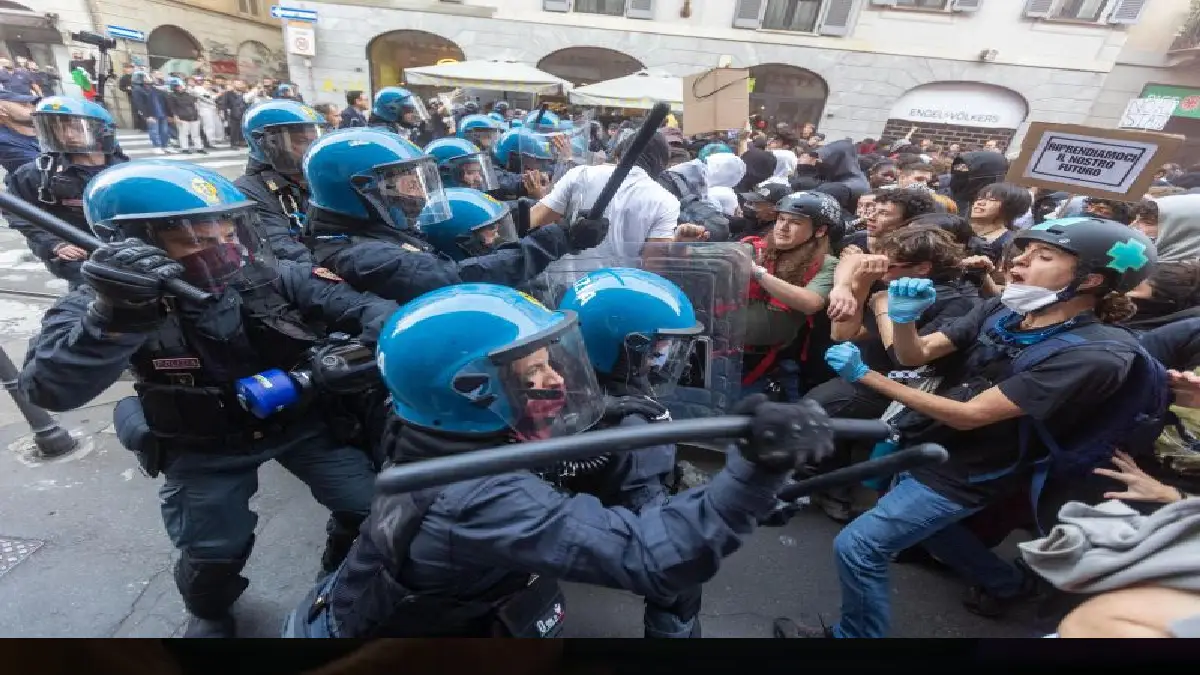
Student-led protests in Albania have escalated into violence in the capital, Tirana, amid anger over education costs, university conditions and allegations of corruption. Reports from October 14 described demonstrators clashing with police, fires at a government building and bank branches, and disruption in parts of the city.
The demonstrations are part of a wider period of public frustration over education, employment prospects and trust in government. Students have raised concerns about the cost of studying and the conditions they face at universities, while wider opposition has focused on transparency and public decision-making.
Clashes in Tirana
Media reports said some protesters threw objects and damaged property, while police responded with water cannons and tear gas. Fires were reported at the education ministry building and two bank branches. Such incidents mark a serious escalation from peaceful demonstrations and can place protesters, police, journalists and nearby residents at risk.
Authorities have condemned violence and warned that people involved in arson or property damage could face legal consequences. At the same time, the handling of demonstrations—including the use of force—can become a point of public scrutiny. Independent reporting and transparent investigations are important when competing accounts emerge.
What is driving the anger?
Students have cited concerns about education costs, university facilities and limited prospects after graduation. The protests have also intersected with broader complaints about corruption and the way major development decisions are made. When people believe institutions are not responding to everyday pressures, demonstrations can become a channel for demands that extend beyond a single policy issue.
However, a protest movement is rarely uniform. Participants may share concerns about education while disagreeing over tactics, political demands or what changes would be sufficient. It is important not to treat every demonstrator as responsible for acts of violence committed by some individuals.
European context
Student and anti-government protests have appeared in different European countries over issues such as living costs, public services, corruption and political accountability. Each country has its own circumstances, so Albania’s unrest should be understood through its domestic political and economic context rather than as a direct copy of events elsewhere.
For Albania, the immediate challenge is to protect public safety while ensuring that grievances can be heard through peaceful democratic channels. Universities, government officials and student representatives may need meaningful dialogue to address demands and rebuild confidence.
What happens next?
Developments will depend on whether authorities pursue dialogue, whether protesters continue to mobilise and whether independent inquiries clarify incidents of violence and police conduct. Information on arrests, injuries and damage can change as officials update their accounts.
Readers should follow reputable news outlets and official statements for verified updates. The central issues—affordable education, accountability and the right to peaceful protest—will likely remain important even after the immediate clashes subside.